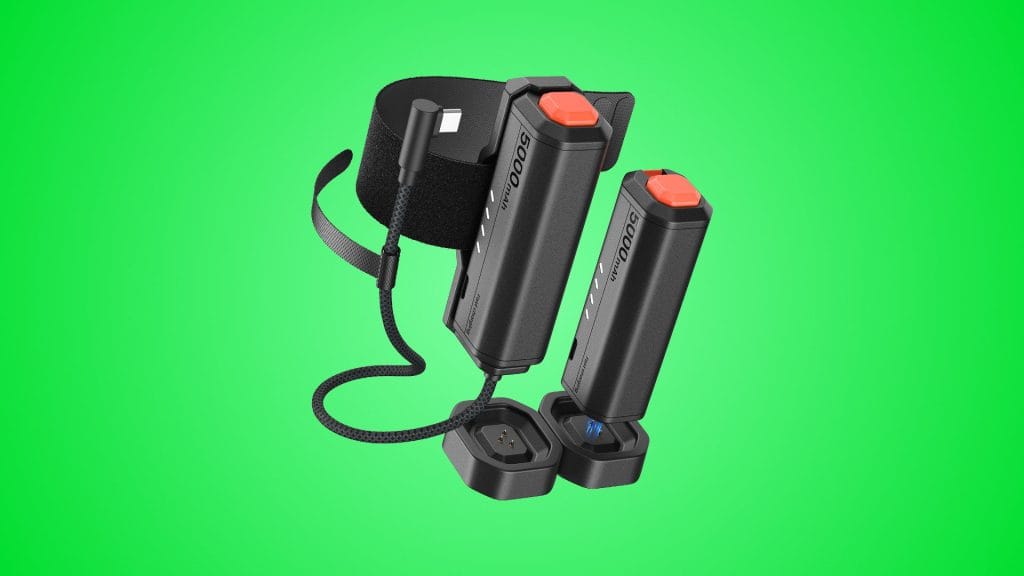
KIWI design P5000 Compact Power Bank
design
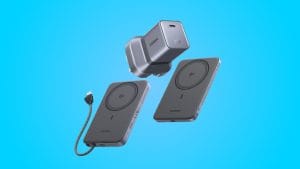
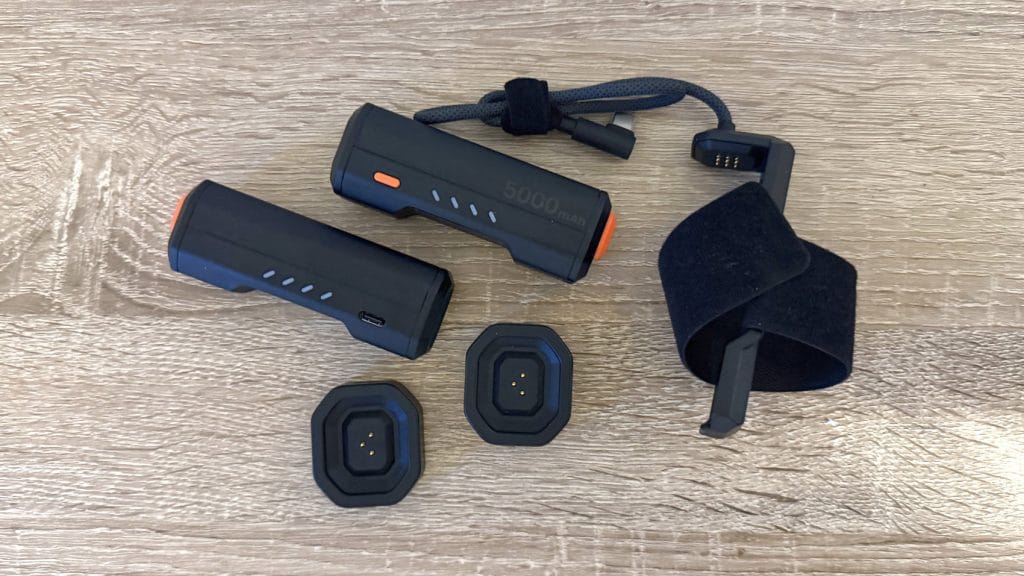
The KIWI design P5000 arrives in a pretty unassuming little box, but it highlights both the size and simplicity of what’s on offer here. Inside you’ll find two 5000mAh battery packs, two charging docks, a mounting bracket with Velcro straps, and a short USB-C cable for connecting to your headset. No mains charger or additional cables for the docks though, so you’ll need to source those yourself, which feels a little bit stingy when you consider the P5000 will set you back £75-80.
The P5000 batteries themselves are compact rectangular units with a matte black finish and orange accents, looking a little like a stick of butter for our American friends. Build quality feels solid without being remarkable and each battery weighs just 105g, which is impressively light. For context, that’s roughly half the weight of a smartphone, and about a third of what you’d expect from a traditional 10,000mAh power bank. KIWI design has clearly prioritised keeping the weight down, and it shows. There’s a small LED indicator showing charge status, a USB-C port on the side, and a contact charging point on the end.
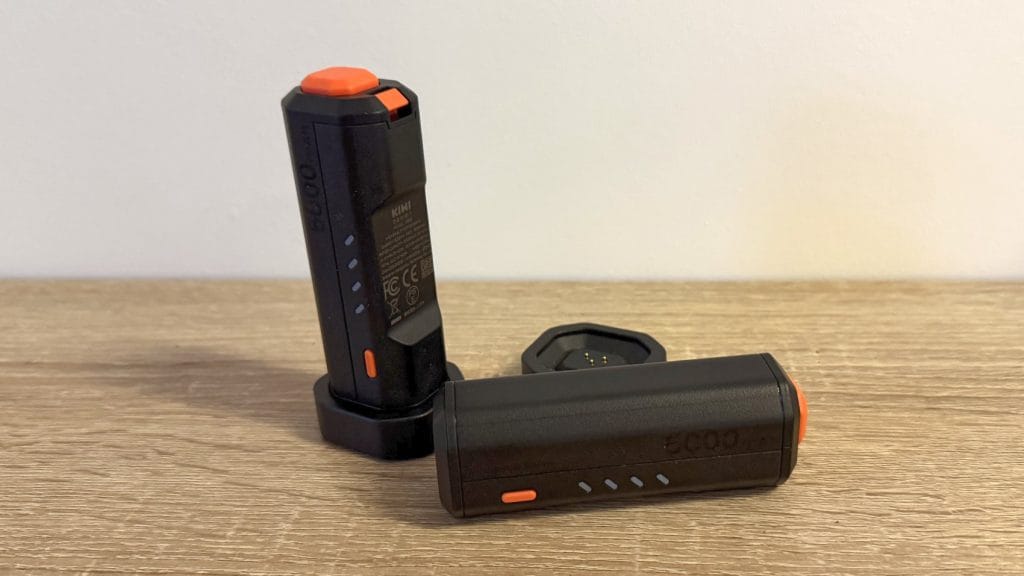
If you’re looking to the KIWI design P5000 as a VR power solution, the mounting system is where things get slightly fiddly. The bracket attaches to whichever head strap you’re using via a reinforced Velcro loop, and the battery clicks into place using a spring-loaded clasp mechanism with an orange release button. But here’s my first grumble: compared to an integrated battery strap, this setup just feels needlessly cumbersome and without much real-world benefit. You’ve got a bracket, a Velcro strap, a cable running to your headset, and the battery itself all adding to the general clutter on top of your head. If you’re already using a comfortable head strap without a battery, say the standard KIWI K4 Comfort or even Meta’s own Elite Strap, strapping this contraption on top introduces friction that a purpose-built battery strap simply doesn’t have.
The charging docks are a nice touch, mind you. Pop a battery onto its dock, plug in USB-C power, and it charges at up to 20W. The idea is that while one battery powers your headset, the other sits charging and ready for a hot-swap. It’s a clever system that technically gives you limitless playtime, and the docks look tidy enough on a desk.
performance
Let’s talk numbers. Each KIWI design P5000 battery delivers somewhere between 60 and 100 minutes of additional playtime depending on what you’re doing. Demanding standalone games with casting enabled will drain things faster; passive video watching will stretch things out. KIWI claims the P5000 delivers a 65% charge to the Quest 3 and 70% to the Quest 3S in about an hour, which aligns with my testing.
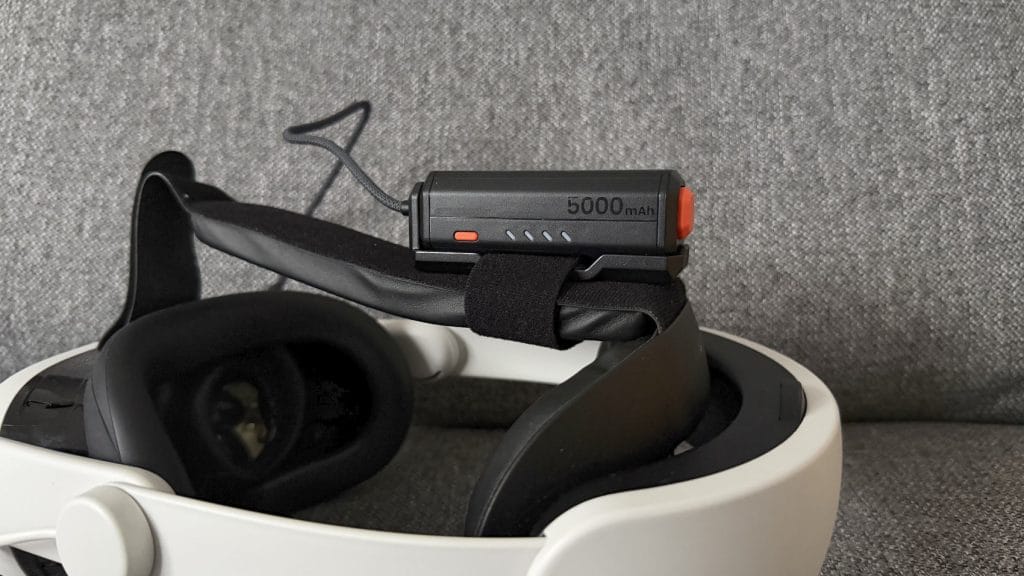
The hot-swap concept works exactly as advertised and it’s an area this really excels as both an idea and a product. When your first battery runs low, you press the orange button, pop it off, slot in the freshly charged replacement, and carry on. No interruption, no waiting around. I even managed to swap the battery over without needing to take the headset off after a bit of practice. If you’re the sort who does marathon VR sessions, this is where the KIWI design P5000 offers its highest value and I can’t really fault it.
Output is rated at 20W via USB Power Delivery. That’s fast enough to keep most VR headsets topped up during use, though it’s worth noting that the Quest 3’s stock charger outputs 18W, and the headset can briefly draw up to 27W under load. The P5000 won’t quite match the fastest PD chargers available, but for practical purposes it’s more than adequate.
Where the KIWI design P5000 stands clear of a traditional battery strap is if and when you take it away from a VR headset. Realistically these are just two small power banks and they do work perfectly well as everyday portable chargers. They’re small and light enough to slip into a pocket or bag without fuss, and 5000mAh is enough to fully charge most smartphones. If you need a little battery boost in your pocket and have a Quest 3 at home, there’s logic here.
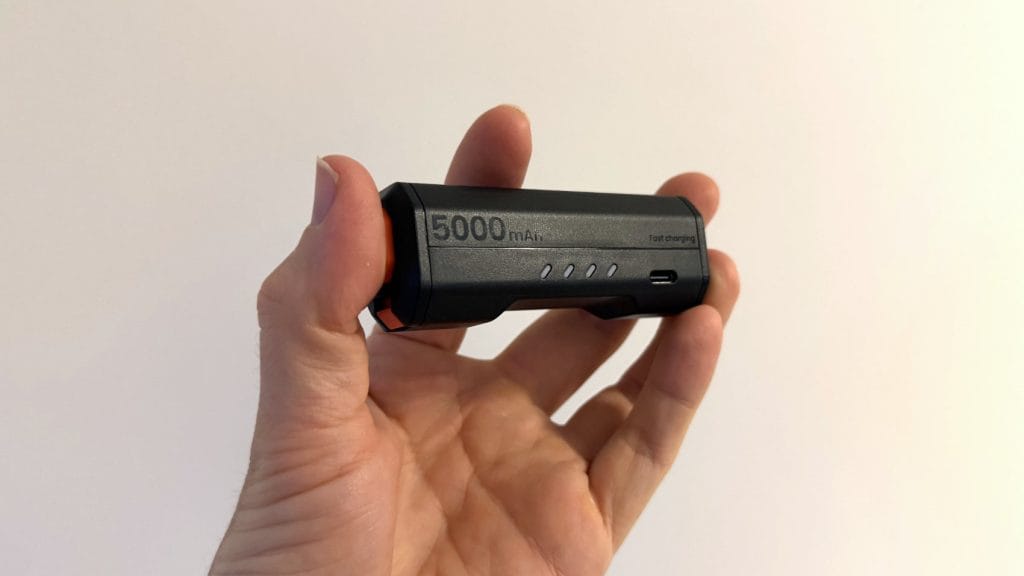
But, and this is the central issue, there are cheaper, higher-capacity power banks if pure portability is your goal. And if VR battery life is your primary concern, the KIWI design battery straps remain the better solution. The K4 Boost offers 5300mAh in an integrated package that also improves comfort and balance, typically for less money than the P5000. The H4 Boost does the same in halo form.
The P5000’s target audience, then, is narrower than it first appears. It makes sense if you own multiple VR headsets across different brands, since it works with anything USB-C powered, or if you’ve already invested in a battery-less premium head strap you don’t want to replace. It also suits users who value the flexibility of having swappable batteries that can charge phones and cameras when not attached to a headset. For everyone else? I think integrated battery straps remain the smarter choice. They’re more elegant, more comfortable, often cheaper, and solve the same fundamental problem without the added complexity.
summed up
While it may sound like I’m not a huge fan of the P5000, I do actually applaud KIWI design for having a crack at innovating. This is just one of those cases where it feels like innovation for innovation’s sake. There’s not necessarily anything wrong with the P5000 as a product, it does exactly what it says it’s going to and it does it pretty well. The problem is that there are already existing solutions that do it all just a little bit better. As a VR power solution, it’s more cumbersome than KIWI’s own excellent battery straps. As a general-purpose power bank, there are better options for the money.
If you already own a KIWI design K4 or H4 strap without battery integration and don’t want to buy a whole new strap, the P5000 makes some sense. If you switch between a Meta Quest 3 and a Pico or other USB-C headsets, the universal compatibility is valuable. If you need a compact backup charger that also straps to a VR headset occasionally, fair enough. For everyone else, and that’s most Quest owners, I’d point you towards something else.