Playseat Challenge DD F1 Edition Sim Racing Cockpit
design
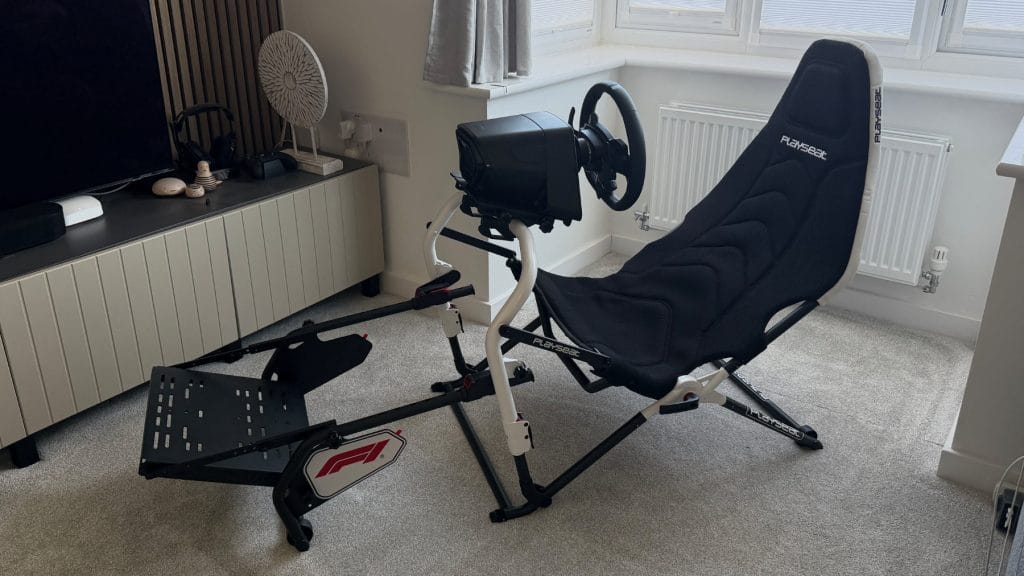
I don’t know how Playseat does it, but I’m always surprised by how compact its boxes are. The Challenge DD F1 Edition arrives in packaging that doesn’t look big enough for what it ends up becoming. It doesn’t take long to find out either. Assembly is a solo job and only took around half an hour. The instructions are clear and there aren’t that many parts, if you’ve ever put together a piece of flat-pack furniture you’ll be fine here, there’s nothing complicated about it.
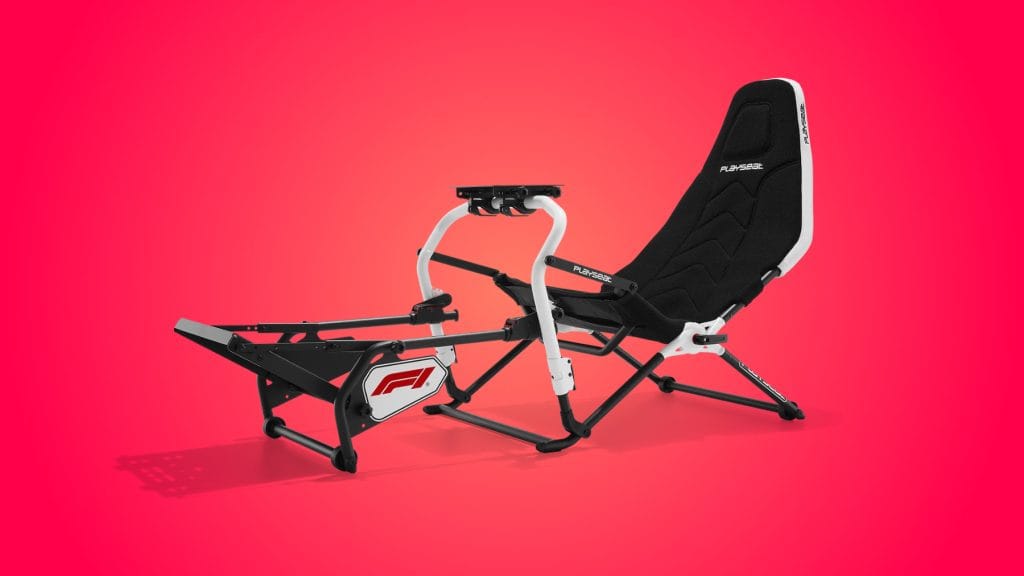
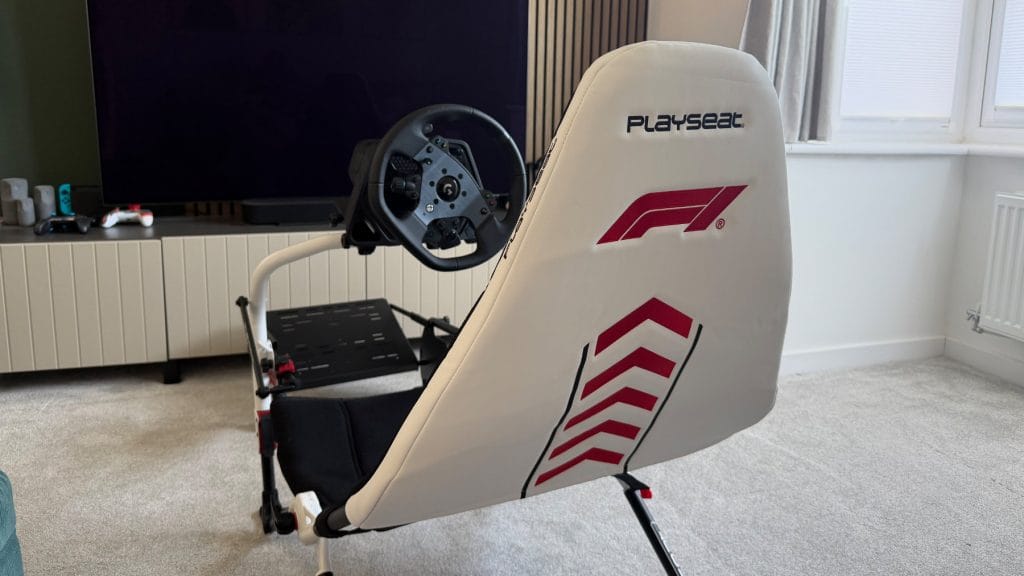
Once built, the F1 Edition looks the part and the changes from previous iterations are both abundant and clear. The Formula 1 partnership sees a white and red livery that leans heavily into the official licensing, with stitched F1 branding on the faux leather backrest and branded panels sitting either side of the footwell. As far as I can tell, those side panels are entirely cosmetic, but they’re out of the way and add to the motorsport aesthetic. When I spoke to Playseat about the chair, the company described the Challenge DD as “passing the girlfriend test” and being living room friendly in its design. Now in fairness, your partner would probably need to at least know who Charles Leclerc was to be completely ok with having this next to the coffee table, but it’s not ugly and it’s a far cry from the industrial look of something like the Playseat Formula Instinct or Trophy.
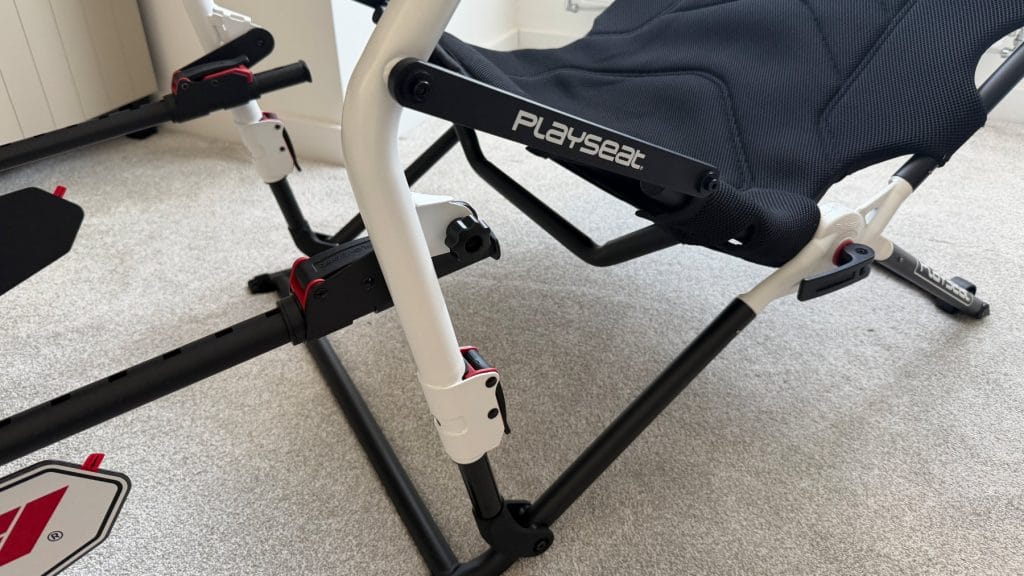
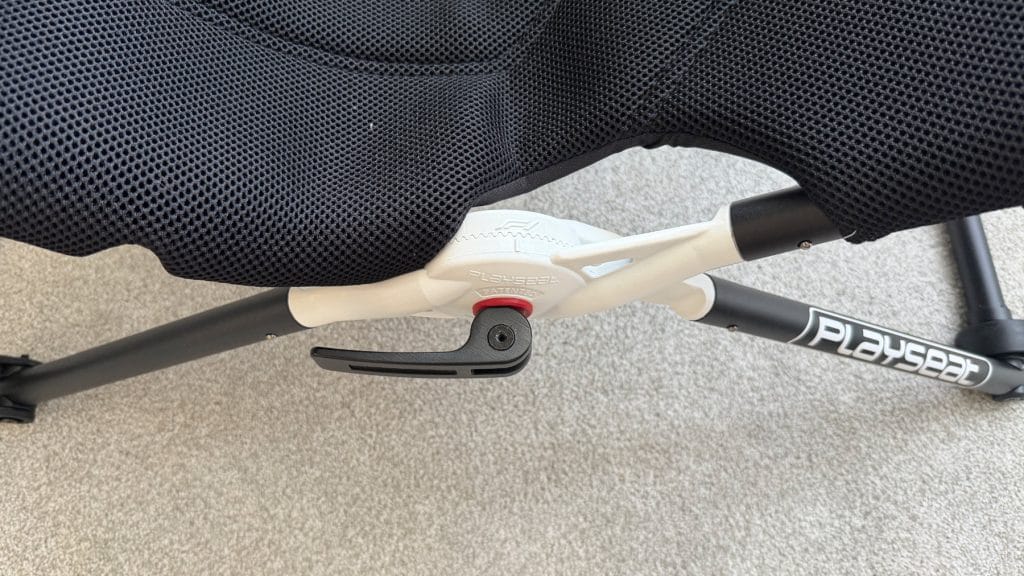
The frame itself is high-carbon steel throughout, and the difference in build quality compared to the Challenge X is apparent. Everything is braced, supported, reinforced, and locked in. Playseat’s X-Adapt and Twinlock systems allow you to adjust pedal angle, pedal distance, pedal height, steering height, steering angle, and steering distance, all tool-free and with impressive ease. The Twinlock mechanisms feel strong and reliable throughout, with a reassuring click when they engage. The easiest way to summarise the difference here compared to previous Challenge specs is it all feels a bit more grown up and professional. Older versions were certainly no toy, but they’d look like it if you sat the two side by side.
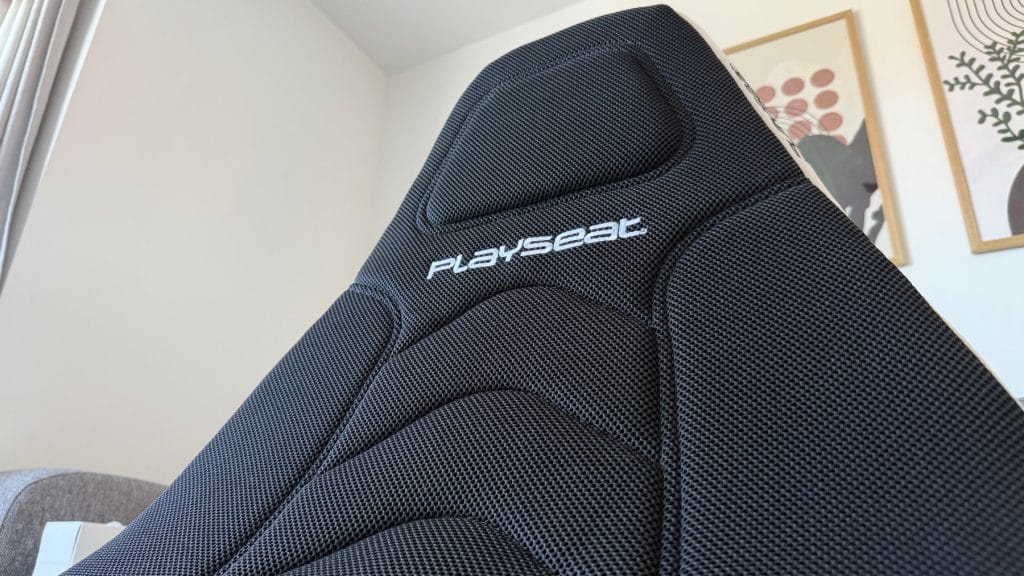
The ActiFit fabric seat retains the hammock-style suspended design rather than a solid bucket like you’d find on the Formula Instinct. It moves with you as you shift in the seat, which I actually find quite pleasant during longer sessions. The material itself is a little scratchy on bare skin and I found when racing in shorts that the underside of my thighs would start to get a little irritated a few races in. Anything covered by fabric was happy enough, though. There’s more padded sections here than previously and it’s a decent upgrade without being plush, you’re not going to choose to sit in the Challenge DD and watch a movie, but it’s perfectly good for lapping Silverstone.
At 16.5 kg the Challenge DD F1 Edition is noticeably heavier than the 11.6 kg Challenge X, a consequence of all that additional reinforcement. That’s also before you’ve added your setup on top. The Logitech G Pro Wheel and matching pedals I was testing with are probably another 10kg on their own, bringing the total package up to quite a lump at the best part of 30kg. In terms of folding and storage, if I’m being realistic it’s right on the edge of what I could honestly call compact. It will fold up to sit out of the way in the corner of a room, but it’s hardly going to disappear into the decor. The built-in castors help with moving it around, but with a wheelbase mounted the whole thing wasn’t particularly stable when standing upright.
I tested with the official Playseat floor mat underneath, you’ll need to buy this separately and any kind of floor or yoga mat would do the job, but I’d consider something like that a near-essential purchase on carpet to prevent the cockpit from digging in and causing damage.
performance
When I tested the Playseat Challenge X, I came in with tempered expectations. A folding set was unlikely to live up to the planted feel of a static rig because it wasn’t really trying to compete. In the back of my mind that was my initial mindset here too, but make no mistake, the rigidity of the Playseat Challenge DD is incredibly impressive for a folding racing seat. Testing with the Logitech G Pro wheelbase, which is big, heavy, and delivers a serious 11Nm whack of torque, the Challenge DD held up excellently.
Paired with the matching G Pro pedals and their 100 kg load cell brake, there was no flex, no wobble, and no movement under aggressive braking. The pedal plate was reliably locked in place throughout testing across a range of racing series from F1 25, to Forza Horizon 6, RaceRoom, and EA WRC. The engineering is near enough on par with Playseat’s fixed rigs, which is a serious compliment for something that collapses down like a lawn chair when you’re done.
Ultimately that’s the major result here. The whole reason the Challenge DD exists is to give Playseat’s portable platform the structural integrity to handle direct drive hardware, and it has nailed it. Everything is braced and locked down in a way that previous Challenge models simply weren’t. It’s a significant step up over the Challenge X and for me, completely justifies the £100 price bump.
That’s not to say the Playseat Challenge DD is perfect, however. It has one annoyance that will affect every driver differently: seating position and visibility. At its lowest, most F1-like setting (which is cleverly marked with the F1 logo on the clamp), the steering wheel sits quite high, and for me it ended up obstructing my view of the bottom of the screen. I’m 6ft, for reference, and even when I switched from the round Logitech wheel to the more open RS Track Wheel it was still in the way more than I’d like. I was able to minimise the impact by lowering the height of the main wheel bar to its lowest setting using the Twinlock system, but the trade-off here is it becoming quite snug around my legs. You could jokingly argue that reduced visibility and a tight cockpit is almost true to life for an F1 car, but I don’t think that’s what Playseat is going for.
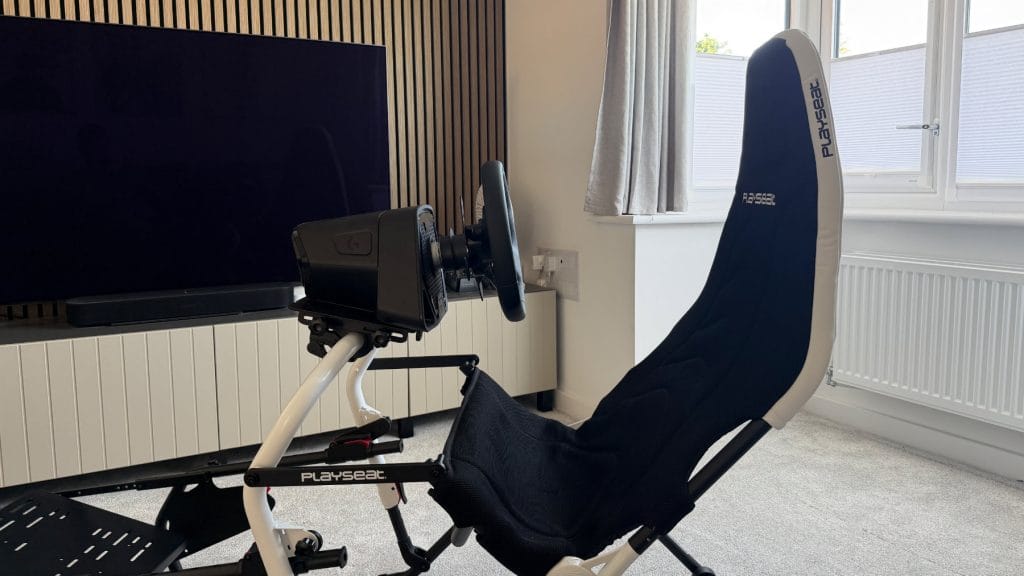
Adjusting the seat to sit a little more upright does begin to resolve the visibility issue further, but it then introduces a new problem of the wheel sitting uncomfortably close to your chest and cramping you for room. The result is a seriously compromised and uncomfortable driving position that I’m not sure I could handle for anything more than a few laps. If you’re an old-school Simpsons fan you’ll know exactly what I mean when I say “do you find something comical about my appearance when I am driving my automobile?”, I felt like that guy. Turns out the character’s name is Ian, if you were wondering. This was me testing at the extremes of what the Playseat Challenge DD can offer, and there is a sweet spot that balances the two, but it involves compromise, and it’s definitely not the ideal driving position you’d hope for from a cockpit that puts “F1” in its name.
Back on the positivity bandwagon, the completely revamped pedal tray makes a huge difference to the overall feel of racing in the Challenge DD, whether that’s in a virtual F1 car or a food delivery van around the streets of Tokyo. Previously, the pedal tray simply lay on the floor and extended out flat in front of you. That’s neither a comfortable, nor realistic place for your feet for racing, and the change to both an elevated and angled position is an excellent one. As you’d expect, there’s a plethora of mounting holes on the pedal tray (as there is on the wheelbase mount plate) which means you shouldn’t have much trouble setting up sim racing gear from a range of manufacturers.
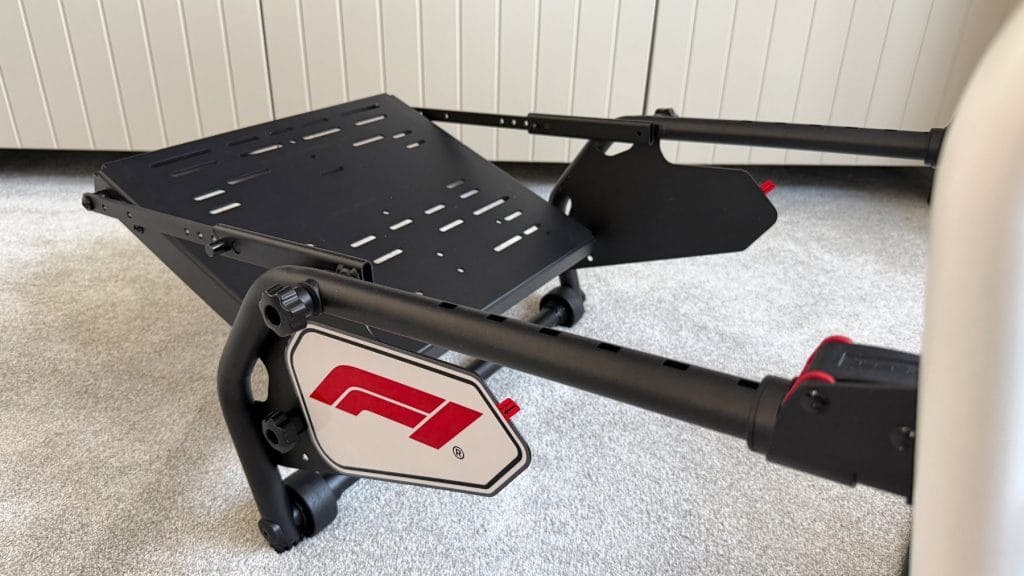
The extra bracing bars do a great job of keeping everything composed on the Challenge DD, except for the driver trying to get in and out, that is. As is so often the case with sim racing cockpits, it’s an awkward process that’s lacking in dignity, though here there are even more bars and pillars to catch your foot on. On previous Challenge models the wheel assembly pivots up to create an easier way in, but pivoting parts are the enemy of rigidity so it’s no surprise to see them removed on the DD. It’s also worth noting there’s no shifter mount included or available, and realistically there isn’t anywhere logical to mount even a custom solution. It’s flappy paddle gear changes only on this one.
summed up
The Playseat Challenge DD F1 Edition is an incredibly impressive piece of engineering that solves the one problem that’s been present in the Challenge platform for years. The rigidity and structural integrity under the load of direct drive hardware is remarkable for a foldable cockpit, and it pretty much matches Playseat’s own fixed rigs. Assembly is painless, the build quality is excellent throughout, and the Twinlock mechanisms inspire real confidence you’re not going to suddenly be sitting on the floor with a wheel in your lap.
The steering position holds it back from absolute greatness though. For a cockpit that’s built around the concept of an authentic F1 driving experience, the compromises needed to find a comfortable and practical seating position are hard to overlook, and they’ll get worse the shorter the driver is. It’s not a dealbreaker, but it is a massive frustration that takes the shine off what is otherwise a superb product.
If you’re a casual but committed racer who doesn’t have a dedicated gaming room, this is the foldable cockpit to buy. The upgrade over the Challenge X is substantial and the direct drive support is the real deal. If you’re only racing every couple of weeks with a lighter wheel though, the Challenge X will do the job well enough for less money. And if you have the space for a permanent setup, the Playseat Formula Instinct F1 Edition or the Playseat Trophy Logitech G Edition remain the better long-term options, not because of any advantage in rigidity or strength, but because they offer a more natural driving position without covering half the road in front of you.