The brains behind each new device is Elgato’s Wave FX Processor, a custom chip developed in partnership with Lewitt Audio. The idea is simple: move as much processing as possible onto the hardware itself. That means your applications receive finished, processed audio without the need for much fiddling down the line. On board you get five DSP effects that cover all the standard tweaks creators need but with zero latency and no CPU load. There’s also an updated Clipguard 2.0 system using multiple ADCs and 32-bit floating-point processing to intercept distortion before it reaches your recording. It’s the same core tech across the range, and it should solve a few headaches for creators of all sizes.
Starting at the more accessible end, the updated Wave:3 MK.2 is a USB condenser microphone built around a supercardioid capsule tuned alongside Lewitt. The multifunction dial and capacitive mute return from the previous generation, but the MK.2 now stores all of its settings directly on the microphone, handy if you regularly move between machines and don’t want to reconfigure everything each time. Auto Gain Wizard is also onboard, for anyone who finds setting input levels more stressful than it needs to be.


For those already committed to an XLR microphone, the Wave XLR MK.2 is the interface that brings it into the Wave Next ecosystem. It offers 80dB of clean gain, 48V phantom power, and 135dB of dynamic range, which comfortably covers everything from sensitive condensers to the gain-hungry broadcast dynamics that have become popular with streamers. Two monitoring modes let you hear either the DSP-processed signal or the fully integrated audio with VST effects applied, which is a useful distinction when you’re dialling in your sound.
The XLR Dock MK.2 is arguably the most niche product in the lineup, it’ll be really helpful for its target audience but that isn’t everyone. It exists exclusively for the Stream Deck +, integrating XLR audio directly into the back without a separate interface cluttering your desk. It delivered the same 80dB gain and phantom power specs as the Wave XLR MK.2, with an upgraded headphone amplifier and dual mix modes. This won’t function as a standalone device though, so if you’re not already running a Stream Deck Plus, this one isn’t your entry point.


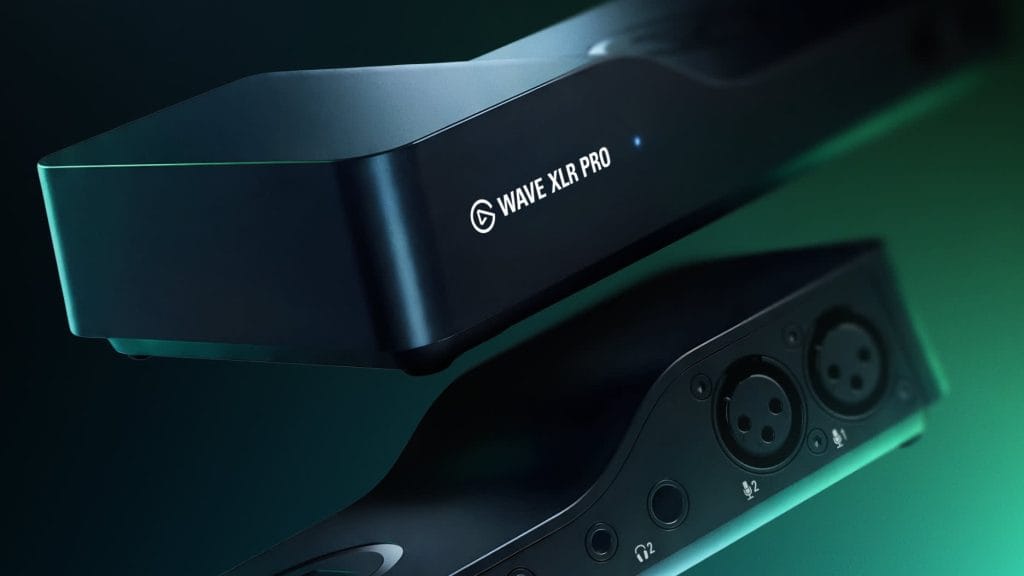
The Wave XLR Pro is where things step up a notch, even if you’ll be waiting until Q2 2026 to get your hands on one. The new addition to the lineup offers two fully independent XLR inputs, each with 80dB of clean gain, replacing the need for a separate mixer in dual-microphone setups. Five hardware-based zero-latency mixes handle routing for stream, recording, and personal monitoring simultaneously. A built-in Maximizer keeps your loudness consistent, and per-channel Ducking automatically pulls down other audio sources when you’re speaking. High-power headphone outputs sit on both the front and rear panels, supporting 3.5mm and 6.3mm connections and headphones up to 600 ohms, so both host and co-host can monitor independent mixes. There’s also a USB Aux input for a second PC, console, or phone, stereo line I/O for external monitors or mixers, and a Standalone Mode that preserves all your routing and DSP settings without a computer connected. There’s a lot going on.

The most striking new release is the gigantic Stream Deck + XL. This beast includes 36 customisable LCD keys, six dials, and an ultra-wide touch strip for adjusting levels, muting inputs, and toggling effects without touching your software. Paired with the Wave XLR Pro specifically, Elgato is positioning this as a complete desktop mixing desk replacement that won’t dominate your setup.
The Wave:3 MK.2, Wave XLR MK.2, XLR Dock MK.2, and Stream Deck + XL are available to order now with the Wave XLR Pro following in Q2 2026.