
Amazon Echo Dot Max (newest gen)
design
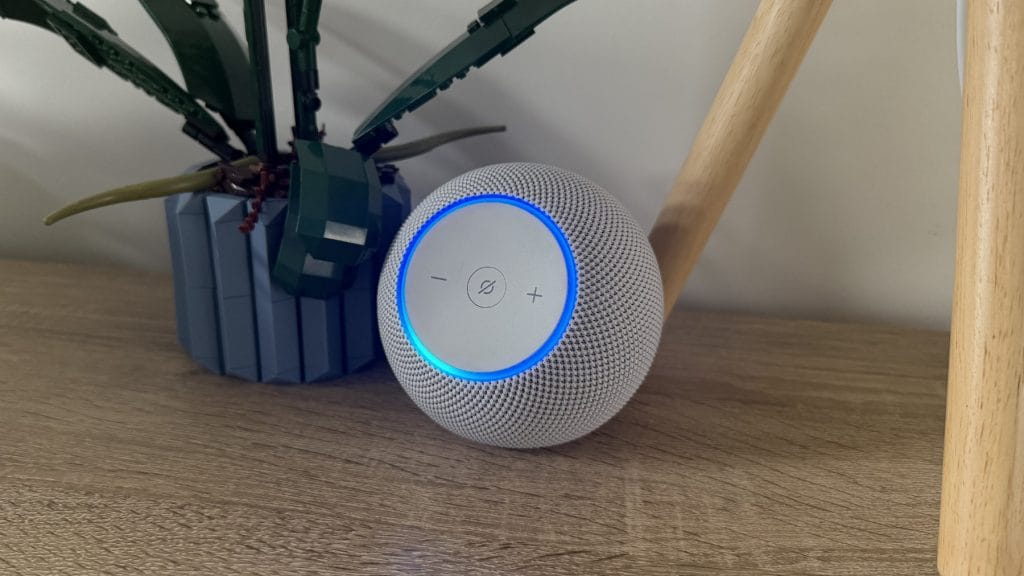
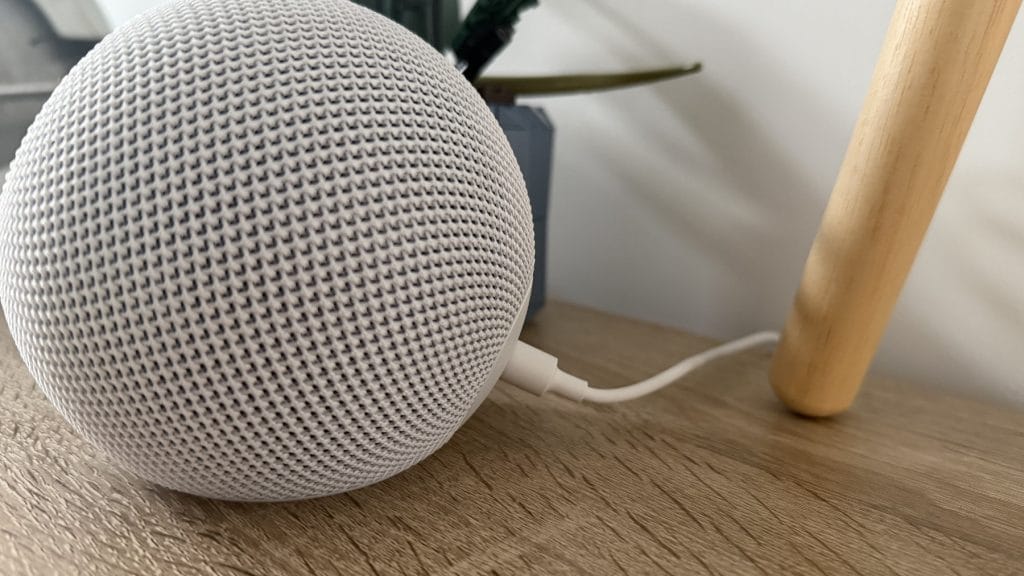
The Echo Dot Max is a slightly larger ball than the standard Dot, wrapped in what Amazon calls “3D knit fabric” that I must admit does look and feel a step up from previous generations. The Glacier White unit I tested should blend quietly into most interior designs, though the Graphite and Amethyst options are available if you prefer your smart speakers to make more of a statement. It’s Max by name but not necessarily in reality, size-wise anyway. It’s still a compact footprint, only around 1cm wider than the fifth generation Echo Dot, though annoyingly the power cable does protrude directly out from the back which prevents tucking it up tight to a wall. I’d have much preferred to see a recessed power connection on the bottom like the Sonos Era 100 or Govee Table Lamp 2 Pro.
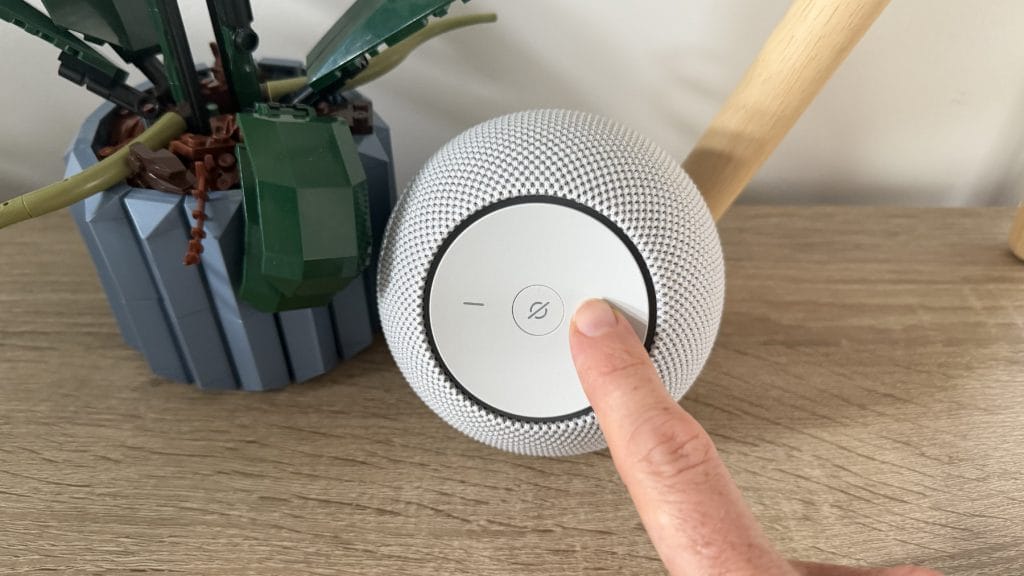
The most notable design change for the Dot Max over its smaller sibling is the relocation of controls to the front face. Volume and mute buttons now sit in a concave disc surrounded by the LED light ring, which glows the familiar blue when Alexa is listening. Amazon has dropped the action button entirely, leaving you with voice commands or the app for anything beyond volume adjustment. I can’t say I’ve missed it, or any physical button on an Echo for that matter. I’ve never made a point of stroking my speakers either, so the tactile improvements to the fabric, while appreciated, aren’t exactly a selling point in my book.
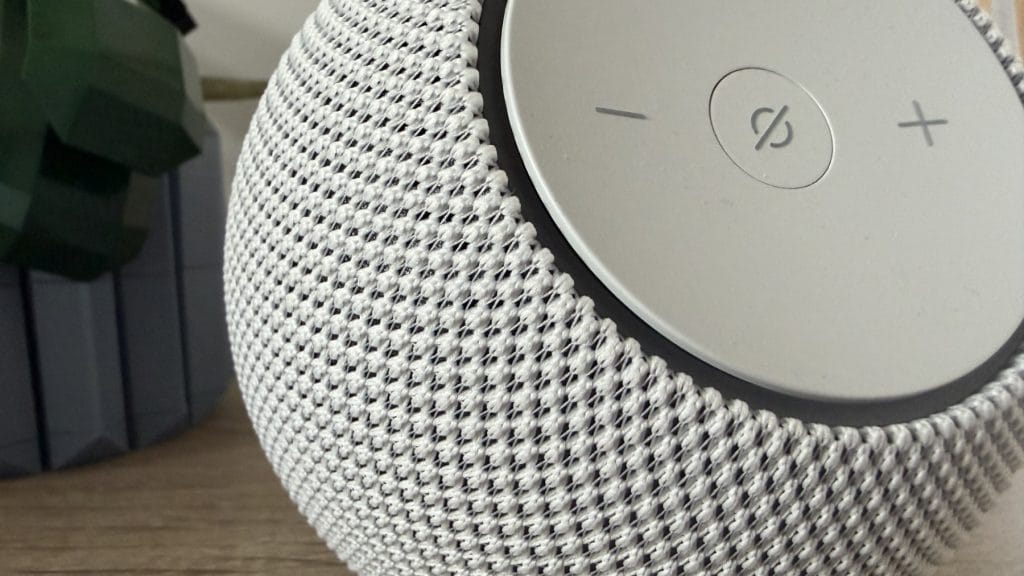
That’s almost all there is to note on a design front; there’s no 3.5mm jack for connecting to external speakers, no USB-C, no official wall-mount option. In a way, I quite appreciate the simplicity of it all, though for a product with max in the name it feels somewhat counterintuitive.
performance
Simply as a speaker, Amazon Echo Dot Max sounds perfectly fine. It’s not revelatory, it’s not disappointing, it’s just entirely competent. Amazon has fitted a 0.8-inch tweeter and 2.5-inch woofer, its first two-way speaker system in a Dot, and it’s paid off because the result is definitely a fuller sound than the standard Dot can muster. Bass is present and reasonably controlled, though anyone expecting wall-shaking low end from a speaker this size needs to heavily recalibrate their expectations.
While I wouldn’t say I was blown away by the quality sound the Echo Dot Max is capable of, what did impress me was how well the Echo Dot Max holds it together at higher volumes. I pushed it to genuinely loud levels, only stopping when I worried about getting a knock on the door from the neighbours, and it retained its composure better than some other dedicated Bluetooth speakers I’ve tested. The Govee Table Lamp 2 Pro, for instance, leans on JBL for sound and still starts to struggle where the Dot Max keeps its head.
For context, I’d put it roughly comparable to the 2nd-generation Echo, Amazon’s original full-size speaker. The Dot Max retains quality better when you crank it up, though the taller, now old-school Echo sounds a touch richer and more satisfying at normal listening volumes. For me, the Echo Dot Max sounds like the sort of speaker that’s perfectly at home in a kitchen or bedroom, providing background music while you cook or a podcast while you drift off. I probably wouldn’t position it as my main living room speaker or lean on it for parties, but that’s not really what it’s designed for either.
The Alexa experience itself is, well, exactly the same as any other Echo device. The new AZ3 processor promises faster responses, and while I couldn’t tell you whether Alexa answered my weather queries 0.3 seconds quicker than before, everything felt responsive enough. The temperature sensor is a nice inclusion for smart home setups, though actually asking the Echo Dot Max what temperature it is proved surprisingly tedious. Unless you phrase your request in quite specific, awkward ways, you’ll be told the feature isn’t supported or it’ll start rattling off the weather. That’s a software issue rather than hardware, but it’s silly nonetheless.
Amazon has packed smart home hub functionality into the Echo Dot Max, with support for Zigbee, Matter, and Thread. This means you can connect compatible lights, plugs, and sensors directly without needing separate bridges cluttering up your outlets. There’s also Omnisense, Amazon’s presence detection system that uses ultrasonic sensors to trigger routines when you enter or leave a room. For anyone building out a smart home ecosystem, these additions represent probably the most compelling reason to choose the Dot Max over the standard model.
summed up
The Amazon Echo Dot Max is a competent smart speaker that does everything adequately without excelling in any particular area. It sounds a touch better than a standard Dot, retains quality a touch better at volumes that would make lesser speakers cry for mercy, and packs a touch more smart home hub functionality that could save you buying separate bridges. The design is smart, the build quality solid, and Alexa remains as useful as it’s ever been, albeit no more useful than on cheaper units either.
The problem is justifying that £99.99 price tag. If you mainly want Alexa and the odd kitchen jam, the Echo Dot 5th gen at roughly half the price will likely serve you just as well, it’s widely considered one of the best budget smart speakers available. The Echo Dot Max occupies an awkward middle ground: too expensive to be an impulse purchase, not impressive enough to justify the premium on audio quality alone.
Where it does make sense is for anyone specifically wanting the built-in smart home hub. It’s a solid choice for kitchens, bedrooms, or home offices where you want something that sounds decent without dominating the space. Just don’t expect it to replace a proper speaker system in your living room.