Elgato Wave:3 MK.2 USB Condenser Microphone
design
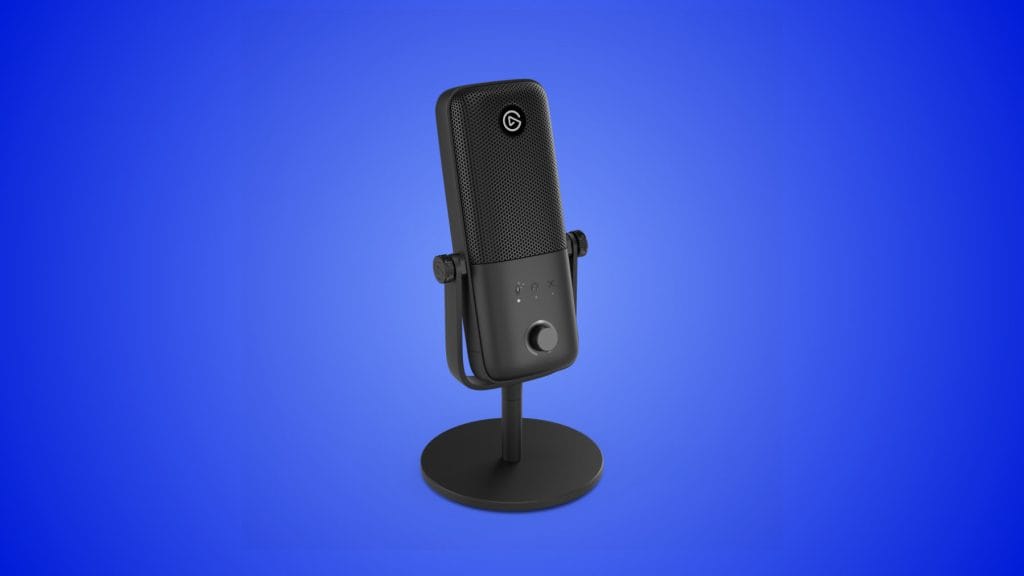
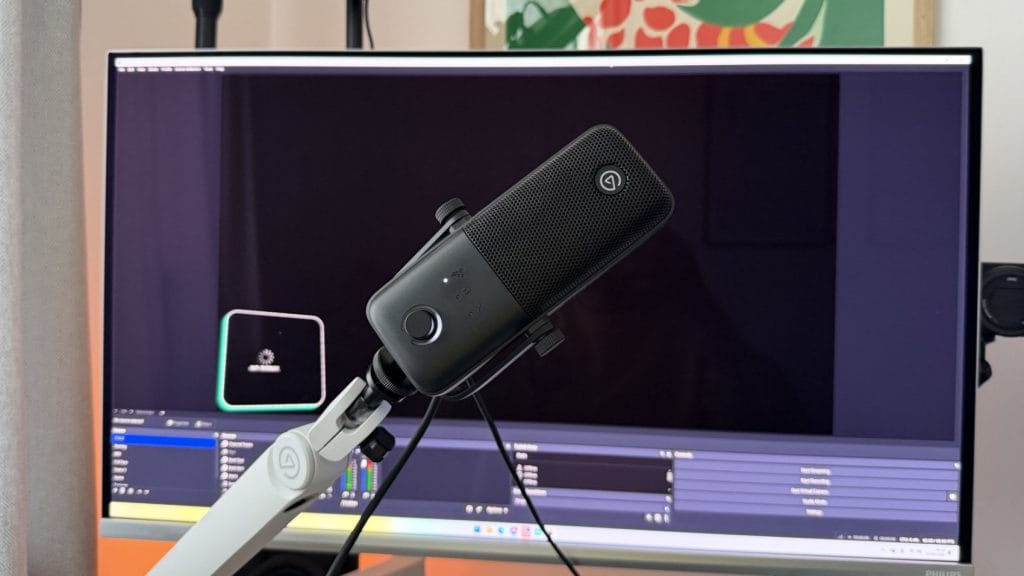
If you’ve seen the original Wave:3, you’ve more or less seen the Elgato Wave:3 MK.2. The flat, pill-shaped mic body returns with its slightly retro silhouette, sitting in a u-mount that screws onto either the included desk stand or a mic arm. It was a good looking microphone the first time around and nothing about the sequel changes that. If it’s not broken, don’t fix it, after all.
The MK.2 has beefed up a little over the last few years, but haven’t we all? It’s added a little size in every direction, roughly 1.5cm taller and 2cm wider than the original, though it remains a compact microphone overall. Those numbers surprised me because unless you sat the two side by side I doubt you’d even clock the difference. Build quality is solid, with a metal upper half housing the steel grille and a plastic lower body that, while not as premium to the touch, doesn’t feel cheap either. It would have been nice to see the metal wrap all the way around but at this price I’m not going to lose sleep over it.
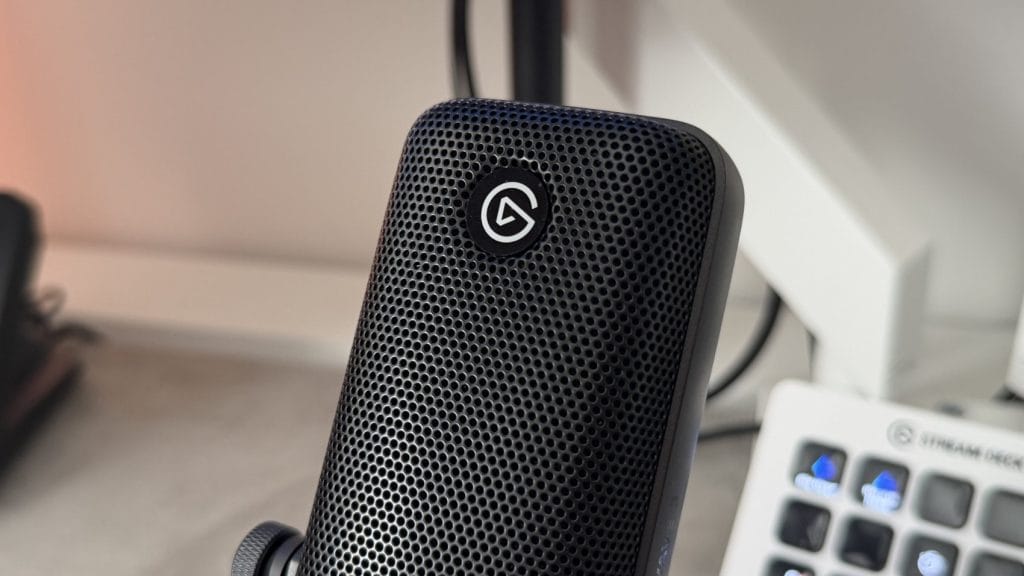
At launch, the Wave:3 MK.2 is only available in black. It’s a perfectly smart, sleek black, but it does sting a little when the original eventually offered seven colour options across its lifespan. Elgato added those over time and I’d expect it to do the same here, but launching without even a white option feels like a missed opportunity.
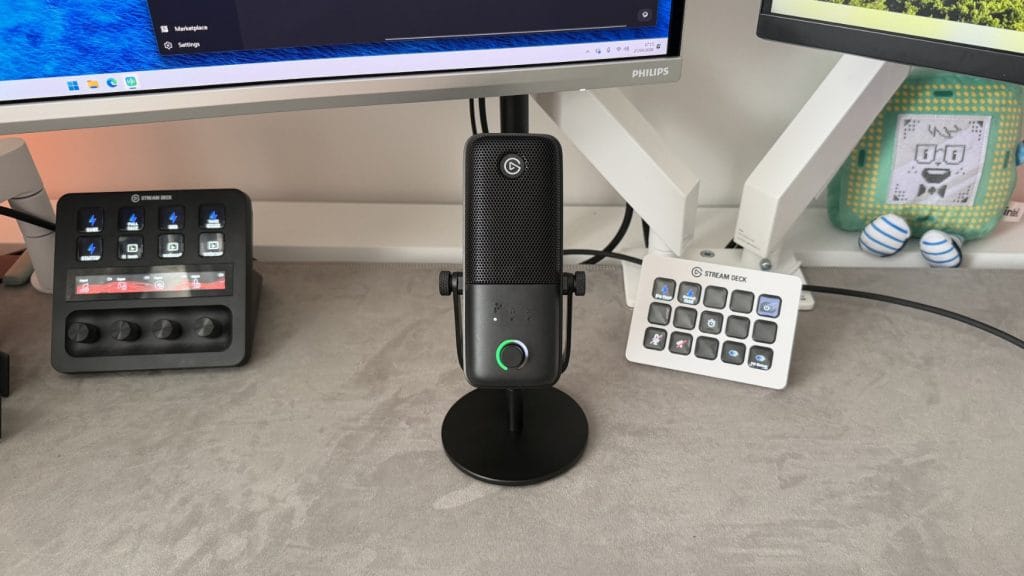
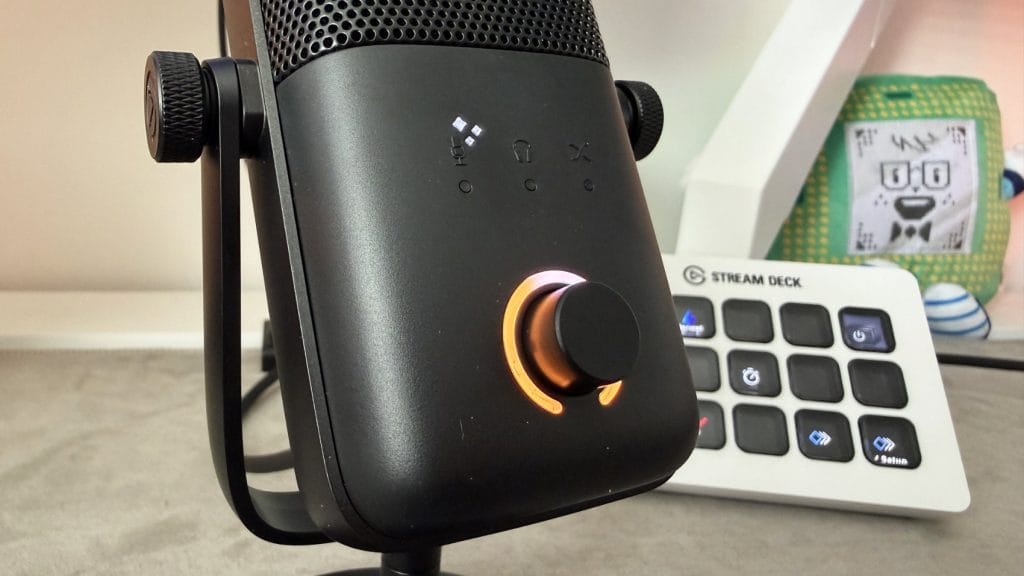
The front of the mic is where the design has actually changed. The three indicator dots for cycling between adjustable levels are still present, now joined by a fourth sparkle icon for Voice Tune. Below them, the row of status dots has been replaced by an LED ring wrapped around the multifunction dial. It displays your current gain level, acts as a live VU meter as you speak, and glows red when muted. It’s a clean system that works well in practice, though the white marker indicating your gain position is a touch too large and blocks too much of the VU meter’s movement for my liking. Around the back sits the USB-C connection and a 3.5mm headphone jack for real-time monitoring, which can now route your post-processed audio too, so you hear exactly what your audience hears. This does add a little latency so you won’t want to keep it on all the time, but the raw audio is realtime if you just want that assurance in your ear.
performance
I’ve spent the best part of a decade streaming on Twitch and have tested a healthy number of microphones along the way, so I’m reasonably well calibrated when it comes to what a USB mic should sound like in 2026. The short version is that the Elgato Wave:3 MK.2 is one of the best I’ve tested recently, but the longer version is more interesting because of how it gets there.
Condenser microphones and dynamic microphones have always come with their own sets of trade-offs. Dynamics tend to deliver a warmer, richer tone with better noise rejection, but they can round off the finer details of your voice in the process. Condensers pick up more natural detail and character, but they’re also far more likely to broadcast your room, your keyboard, and every other ambient sound along with it. What Elgato appears to have achieved with the MK.2 is a condenser that borrows heavily from the dynamic playbook, capturing warmth and fullness without the usual roominess penalty. I’ve started calling it a dynamenser, which isn’t a real word but probably should be.
The Wave:3 MK.2 made me sound like myself, just a cleaner, more polished, 4K version. You’d think that’s an obvious thing for a microphone to do, but funnily enough, it’s surprisingly difficult in my experience. So many mics I test produce objectively good audio but impose their own character on everything that passes through them, processing every voice in the same fixed way regardless of who’s speaking. The MK.2 doesn’t do that, or at least, it does a much better job of adapting to the voice in front of it.
Under the hood, the spec sheet tells an interesting story. The condenser capsule has shrunk from 17mm to 16mm and the pickup pattern has shifted from cardioid to supercardioid, which together should mean tighter focus on what’s directly in front of the mic and less sensitivity to what’s around it. Dynamic range has climbed from 95dB to 110dB and max SPL from 120dB to 130dB. The 96kHz sample rate option has been dropped entirely, which technically is a downgrade but realistically makes no difference to the vast majority of streamers and podcasters who were never recording above 48kHz anyway. I promise you can barely tell the difference without a professional set of headphones or speakers.
The real story though is what Elgato has done on the processing side and where it’s doing it. The new Wave FX Processor runs five DSP effects onboard the mic simultaneously, a low-cut filter, expander, compressor, four-band EQ, and Voice Tune, all without touching your computer’s CPU. Clipguard has been rebuilt as a multi-stage system for version 2.0, and a new Auto Gain Wizard will analyse your voice and set optimal levels for you.
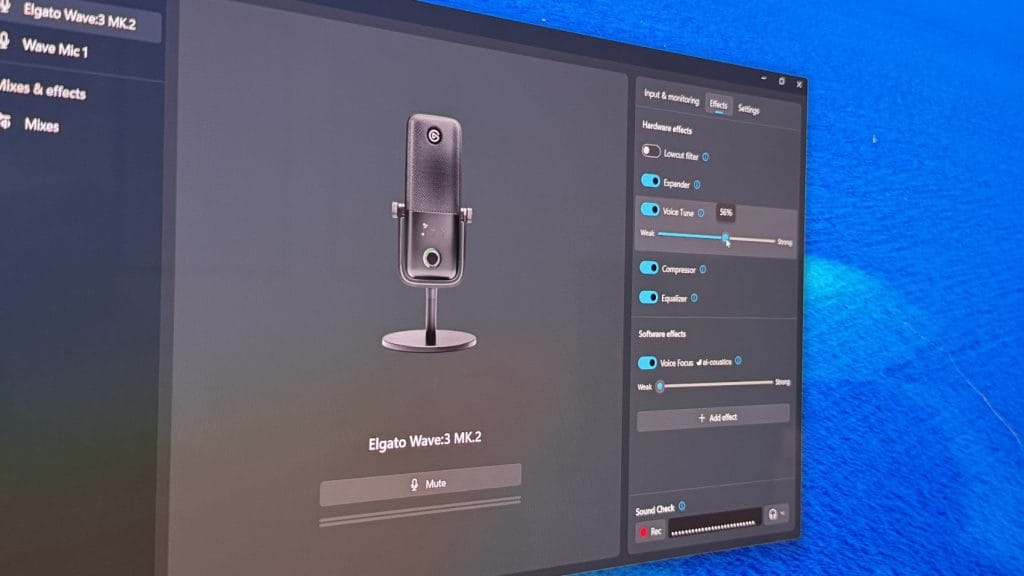
Of those, Voice Tune deserves the most attention. It analyses your input signal in real time and dynamically adjusts compression and harmonic saturation, essentially enhancing the natural qualities already present in your voice rather than imposing a fixed processing profile on top. Think of it like adding salt to food, the right amount brings out the flavours that are already there without drawing attention to itself, but overdoing it makes the seasoning all you can taste. I landed on roughly the halfway point in the slider and found that sweet spot where everything sounded richer and more present without feeling processed. Pushing it higher started to veer into an overly polished broadcast tone that didn’t suit my style, though I could see it working well for podcasters who want that kind of sound.
Then there’s Voice Focus, Elgato’s AI-powered noise isolation that runs through the Wave Link software on your device rather than onboard. It does more than just strip out background noise, I found it gave the overall output a helpful lift and was one of the key ingredients in eliminating the roominess condensers are usually criticised for. It’s worth noting that Voice Focus runs on your PC rather than the mic’s processor, but it wasn’t noticeably taxing on my system.
Placement-wise, Elgato recommends sitting 10-20cm from the mic for the best results. I was able to push that out to around 30cm without any noticeable quality loss, keeping the mic comfortably out of my camera’s frame. It wasn’t until I hit 50cm or more that things started to thin out, and even then only when I stayed directly on-axis. Moving off to the side had a much more immediate effect, which is the supercardioid pattern doing exactly what it’s supposed to.
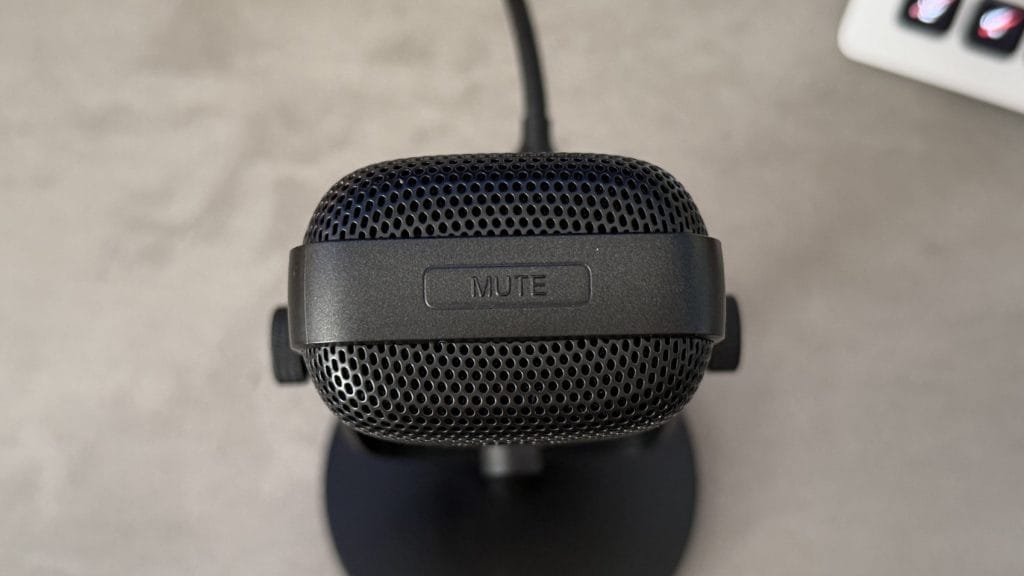
I do have a couple of gripes. The capacitive mute button on top is far too sensitive and that’s the same as it was on the original, nothing’s changed there. I accidentally muted myself mid-stream on more than one occasion just by reaching past the mic or adjusting its position, and while the LED ring makes it obvious enough that you’re muted, it’s still an annoyance. I actually managed to trigger it with my finger getting very close to, but not actually touching the top of the mic – that’s how sensitive it is. Voice Focus can also be a bit overzealous, it was only adequate at filtering my mechanical keyboard and on a podcast recording I noticed it trimming the edges off quick comments and laughter, leaving them half audible. When it works it’s great, but it doesn’t always agree with you on what constitutes noise.
summed up
It may look the same, but the Elgato Wave:3 MK.2 is more than just a spec bump on the original. Elgato has had a rethink of how a USB condenser microphone should handle your voice from capsule to output and it’s a huge success. The combination of a redesigned capsule, onboard DSP, and a processing chain that enhances rather than overwrites your natural vocal character puts it in a very interesting spot in the market.
It’s not the cheapest USB microphone you can buy at £159.99, and if you’re the type of person who enjoys tinkering with software EQ and processing chains yourself, you could get close to this kind of result with a cheaper mic and some patience. But if you want something that sounds this good with this little effort, the Wave:3 MK.2 is a very easy recommendation.