ONEXPLAYER X2 3-In-1 Al Gaming Handheld
design
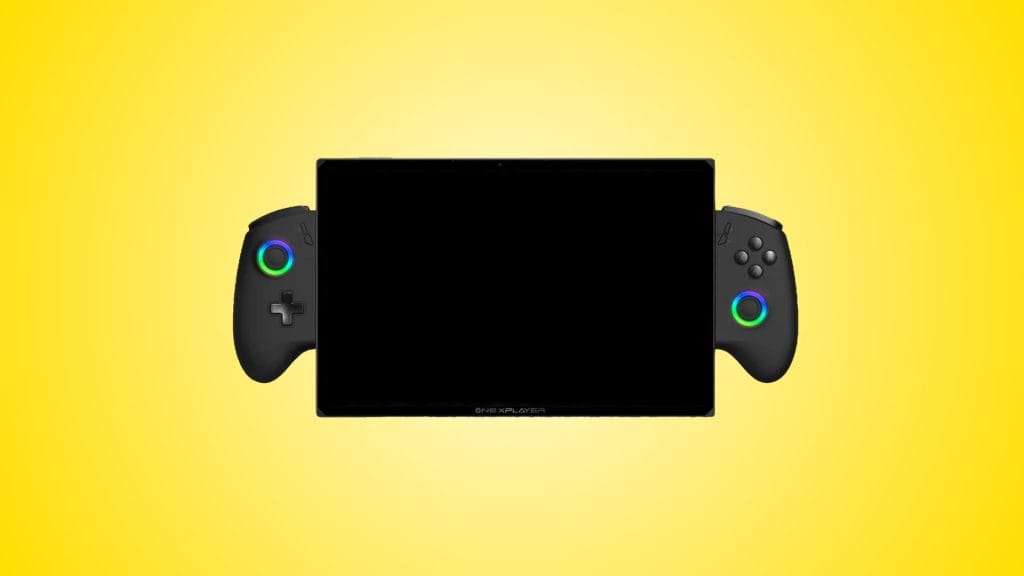
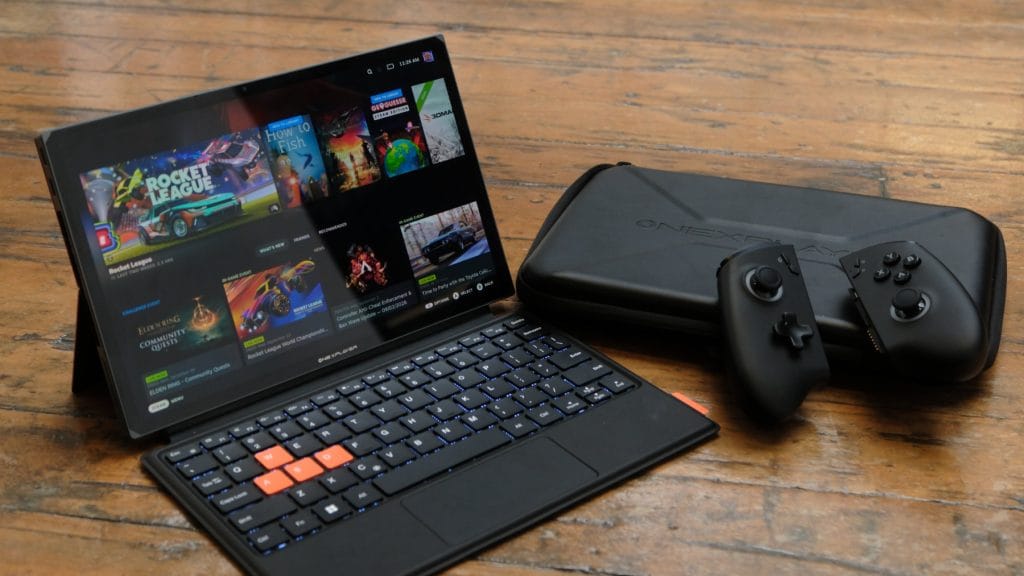
There’s no denying the ONEXPLAYER X2 is a fascinating bit of kit, but picking it up reveals an immediate identity crisis. This feels like an ultra-compact laptop first, a handheld second, and a touchscreen tablet third. It’s quite a mix.
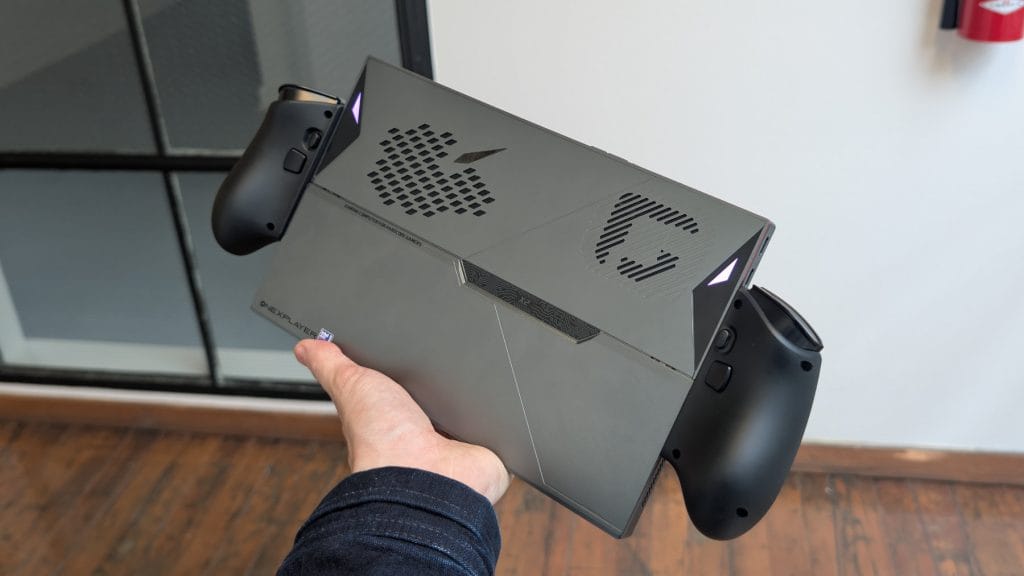
With a 10.95 inch display, the ONEXPLAYER X2 is hardly pocketable. Not that it’s necessarily trying to be, but it’ll command plenty of real estate in your backpack. The chassis itself is metal and it holds up its end of that premium feel nicely, but what doesn’t hold up well is its own weight in your hands. This thing is heavy. Propped against something solid, a table, your knees, a pillow, it’s fine, but holding it unsupported for any length of time turns into hard work fast. Compared with the Steam Deck the difference is obvious, I can comfortably hold a Steam Deck above my face lying down for a few minutes of gaming. Try that with the X2 and you’re fighting gravity the whole time and risking a broken nose.
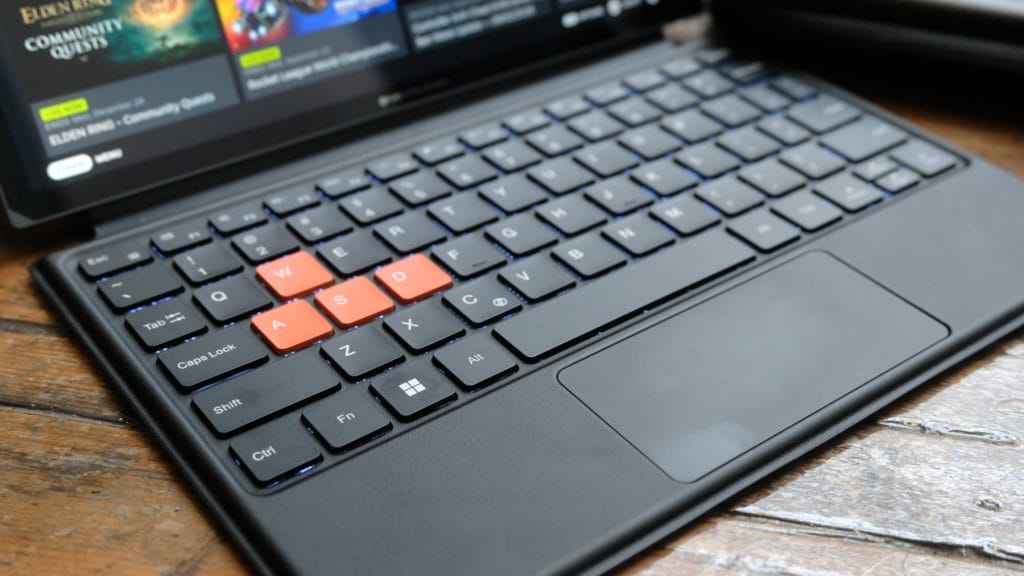
Credit where it’s due though: the core device itself is well designed. The X2’s metal chassis feels suitably premium for its price tag, the built-in stand is sturdy for what it achieves, and the general build quality across the tablet itself is excellent. The modular magnetic keyboard attachment is an absolute triumph, too, which is just as well as I’d consider it almost essential to getting the most out of the device. It instantly turns the ONEXPLAYER X2 into a genuine ultraportable PC.
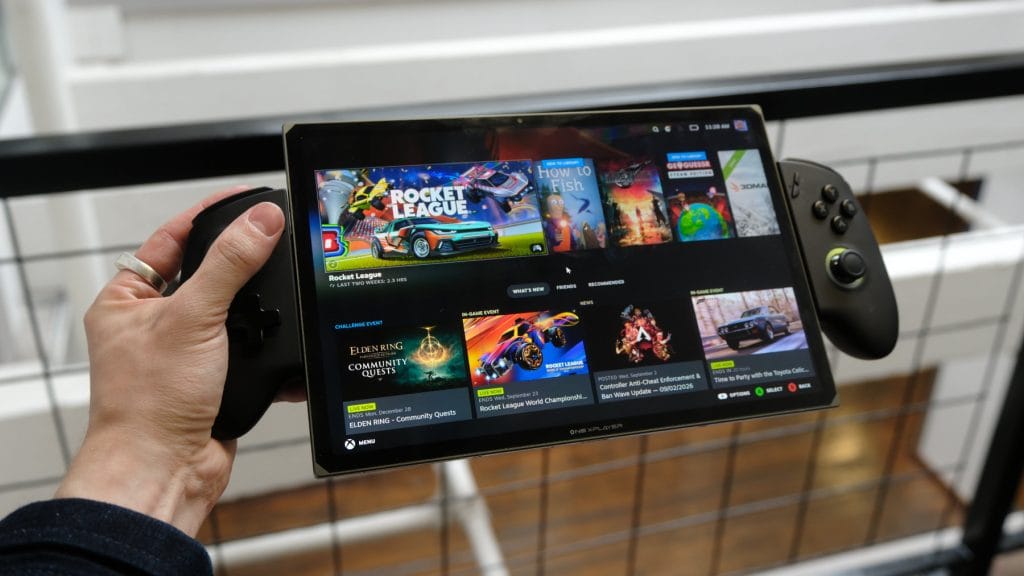
The 2.5K display is LCD rather than OLED, and I went in expecting to notice the compromise. To my surprise, I didn’t. Colours held up, contrast didn’t feel short-changed, and the picture stayed sharp and clear throughout testing. As someone who uses OLED panels on most of my other devices day to day I can’t say I missed it on the ONEXPLAYER X2. If you need OLED’s black levels for other work, that itch won’t be scratched here, but for everyday handheld use, LCD isn’t the letdown you may instantly assume it is.
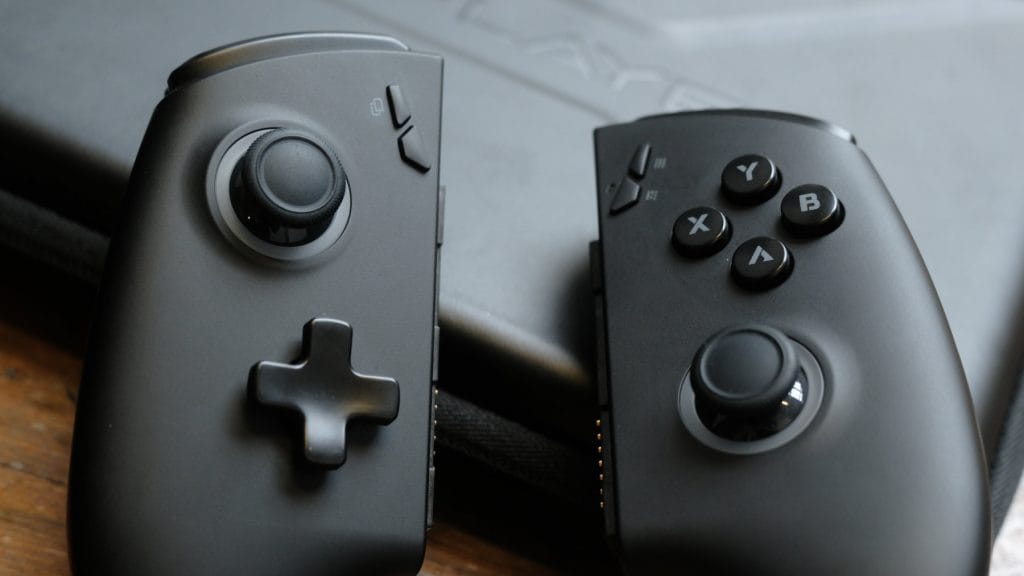
The X2’s existential confusion becomes glaringly obvious when you look at the included controllers. They’re awful. They feel incredibly light and hollow, bad enough on their own but even worse alongside the nicely put together main device. The contrast is sharp and it quickly ruins the experience. The buttons have a pseudo-mechanical click to them that feels fine, but the thumbsticks are where things really fall apart. The deadzones on the left stick seemed to basically be broken on my fresh unit. Flicking down in a menu is effortless, but flicking up often takes several tries just to get the angle right to register an input. On the right side, the ergonomics are absurdly bad. The stick is positioned so low that regardless of hand size, reaching downward to aim properly is incredibly awkward. For fast-paced gaming, it’s a massive problem.
That’s not the only odd detail in the button layout, either. The volume rocker is set up where the left button increases volume and right for decreasing, which is counterintuitive and only makes sense if you’re holding the X2 in vertical tablet mode rather than flat in your hands as a handheld. Admittedly this is a very minor gripe, but it’s one more sign of a device that hasn’t fully committed to what it wants to be. The speakers themselves are unremarkable, fine for general sounds but not something you’d choose over headphones for actual gaming.
performance
While the exterior hardware and design choices certainly have their fair share of non-literal rough edges, jump in game and the ONEXPLAYER X2 immediately shows where every single penny of that premium price tag went. The Intel Arc G3 Extreme at the heart of the X2 is tasked with carrying most of the load, and to put it bluntly, this chip screams.
I threw a pretty punishing gauntlet of titles at it: Cyberpunk 2077, Ghost of Tsushima, Forza Horizon 6, 007 First Light, Overwatch, and Returnal. Across the board the X2 handled them brilliantly, well above medium or high settings at times, and I was able to fully immerse myself in them in the same way I would on a more traditional console or gaming PC. What surprised me most was how well the ONEXPLAYER X2 handled thermal management throughout. The fans on the X2 are remarkably quiet and efficient, and the chassis never felt uncomfortably warm during heavy gameplay. Comparing that to something like the ZOTAC Zone which had fans that rivaled the decibels of the aeroplane I was using it on, it’s an impressive feat.
When properly tuned, native performance feels great, but do yourself a massive favour: turn on Intel XeSS. The AI upscaling technology is an absolute game-changer in a device like this, wringing out extra performance that transforms heavy hitters from playable to buttery smooth on the X2’s 120Hz screen. The software experience remains a classic Windows tale of two halves; you’re constantly troubleshooting and tweaking settings to get into the action and it can be a real slog to get where you want to go, but once you put in the legwork, the in-game results are spectacular.
Sadly, you won’t be there for too long because battery life is where the more generous marketing claims come back to bite. ONEXPLAYER’s own PCMark-based testing puts the X2 at up to 14 hours of office use, but that number belongs in a spreadsheet, not a charging schedule for anyone buying this to game on. From my testing, lighter, less demanding titles will get you somewhere around two to three hours away from the mains. Push into heavier games with performance modes switched on and that drops to something nearer an hour, maybe two at best before you’re hunting for a socket. This isn’t surprising, of course, it’s a problem that continues to limit any kind of handheld gaming device, but it’s worth calibrating your expectations to the game you’re playing and maybe keeping a beefy powerbank nearby.
summed up
The ONEXPLAYER X2 is equal parts brilliant and frustrating. As an engineering showcase for Intel’s mobile silicon, it’s an astonishing demonstration of portable horsepower, brilliant thermal management, and shape-shifting flexibility.
But away from marketing materials or tech demos, who is this actually for? At $2,199, this absolutely isn’t a user-friendly entry point that’s going to welcome a flood of new handheld PC gamers to the lobby. Anyone new to PC gaming in general will get completely lost trying to troubleshoot basic Windows quirks and dial in settings. It’s a wildly expensive device that demands an advanced enthusiast’s patience, the kind of person who doesn’t mind tinkering to make things work.
Ultimately, it means the ONEXPLAYER X2 is a niche luxury rather than a market winner. It’s for the hardcore gamer who already has a dedicated main rig, perhaps a beefy PC, a PlayStation 5 Pro, or an Xbox Series X, and specifically wants an ultra-portable, high-powered companion for continuing their gameplay on the go. If you’ve got a couple of grand to drop and simply want to add another fascinating piece of hardware to a sprawling tech arsenal, the raw silicon muscle here is superb. But it’s far too expensive to be a novelty that just gathers dust on a shelf, especially when those ergonomically flawed controllers make it such an awkward thing to hold.