Elgato Wave Neo Condenser Microphone
design
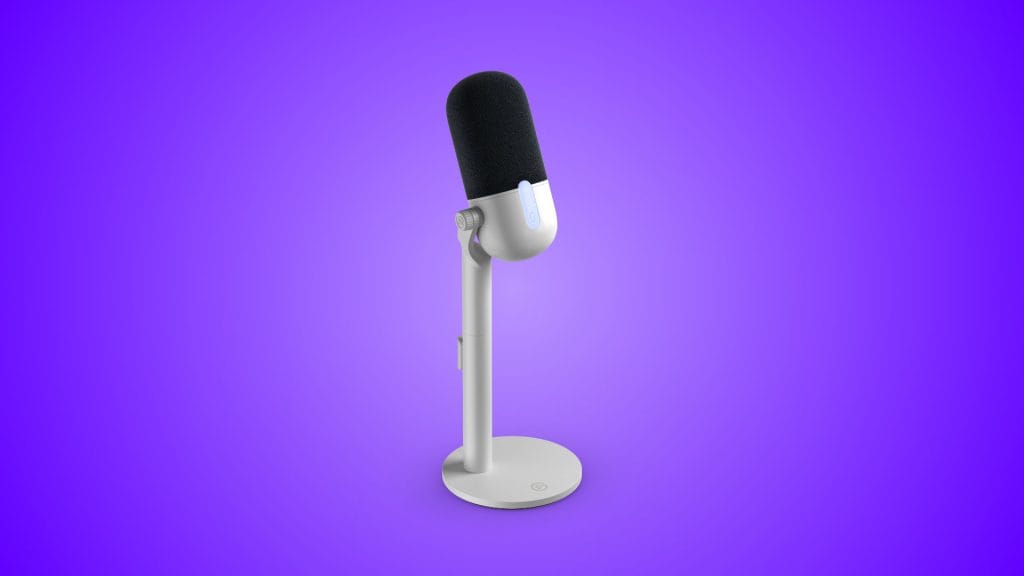
There’s something quite endearing about the Elgato Wave Neo. It’s a small, pill-shaped microphone wrapped in a white plastic shell, made from more than 60% recycled material, and it looks like nothing else in Elgato’s current range. If you want something other than white, your only option is to swap out the foam pop filter for one of five pastel-coloured alternatives that’ll set you back around £12 each. The mic body itself stays white regardless. The whole package comes with a weighted metal base, a riser extension bar, a pre-fitted black foam pop filter, and a braided USB-C to USB-A cable. Elgato has also gone entirely plastic-free with the packaging too, which is a consistent theme across the Neo family.
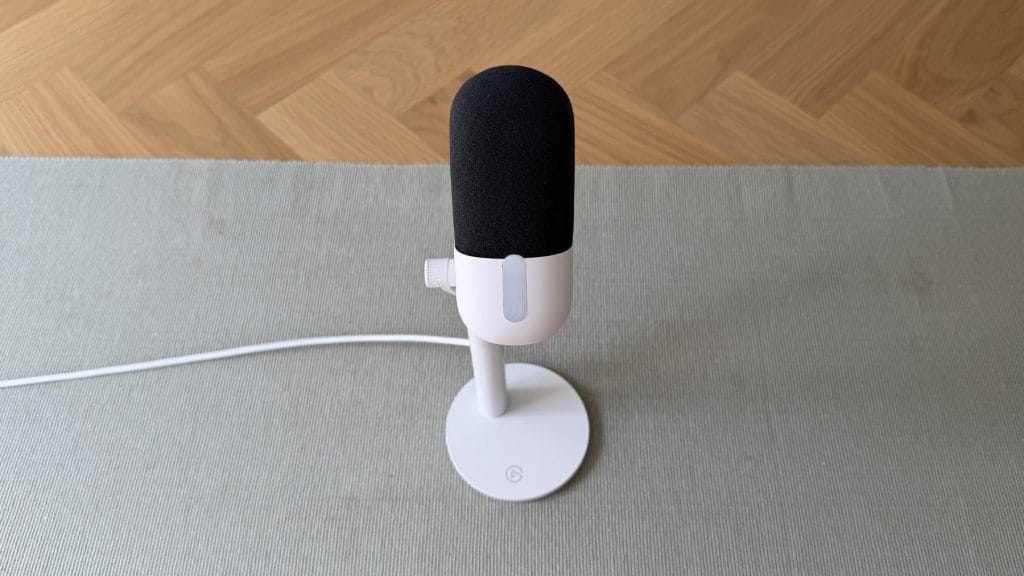
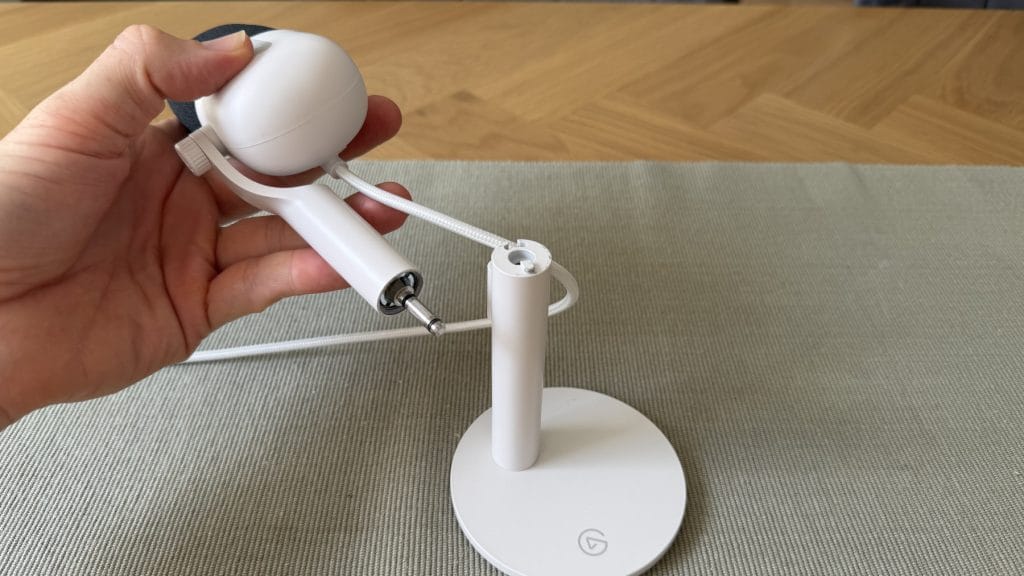
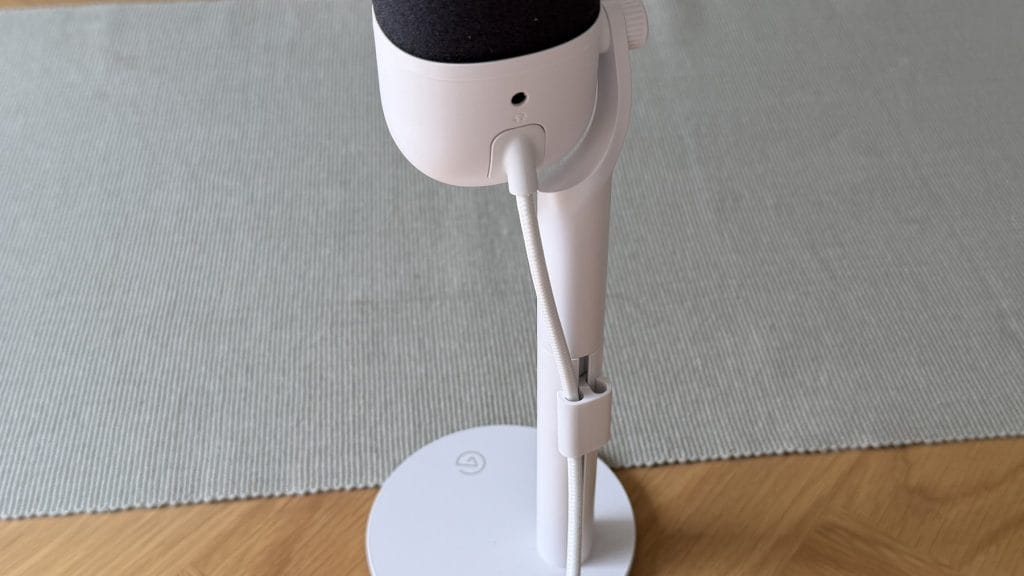
The Wave Neo is decidedly compact and takes up very little real estate in your workspace. The base footprint sits at just 9cm and the overall profile is understated enough that it won’t look out of place next to a work laptop in a dining room or home office. The weighted base does a good job of keeping everything planted, and there’s a tidy cable guide on the back of the riser for routing the USB lead. You can assemble the stand with or without the extension bar depending on how close you need the mic to sit, and if you’d prefer a boom arm setup, the Wave Neo supports 1/4″, 5/8″, and 3/8″ mounting threads.
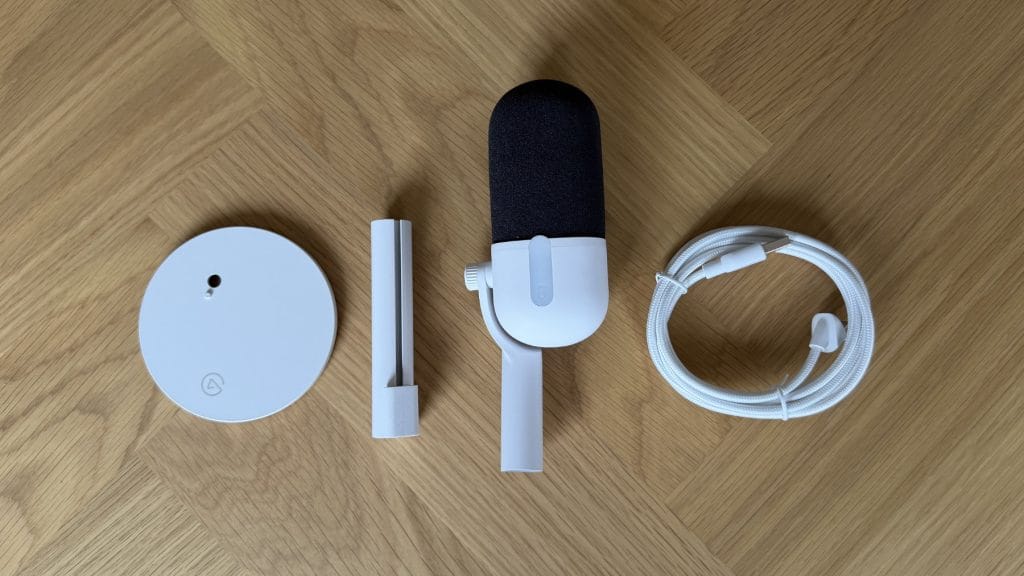
There are a couple of fit-and-finish on the Wave Neo details that surprised me, though, and not in a good way. The connection between the riser bar and the base is loose and wobbly, with nothing to properly lock it in place. You stop noticing once the mic is set up and sitting still, but the first time you go to reposition it and the top half lifts clean off in your hand, it’s a bit irritating. The seam where the pop filter wraps around the mic body and butts up against the central LED is also a little rough. These are small things, but from a brand that’s built its reputation on polished, premium-feeling hardware, the Elgato Wave Neo feels like it’s cut a couple of corners.
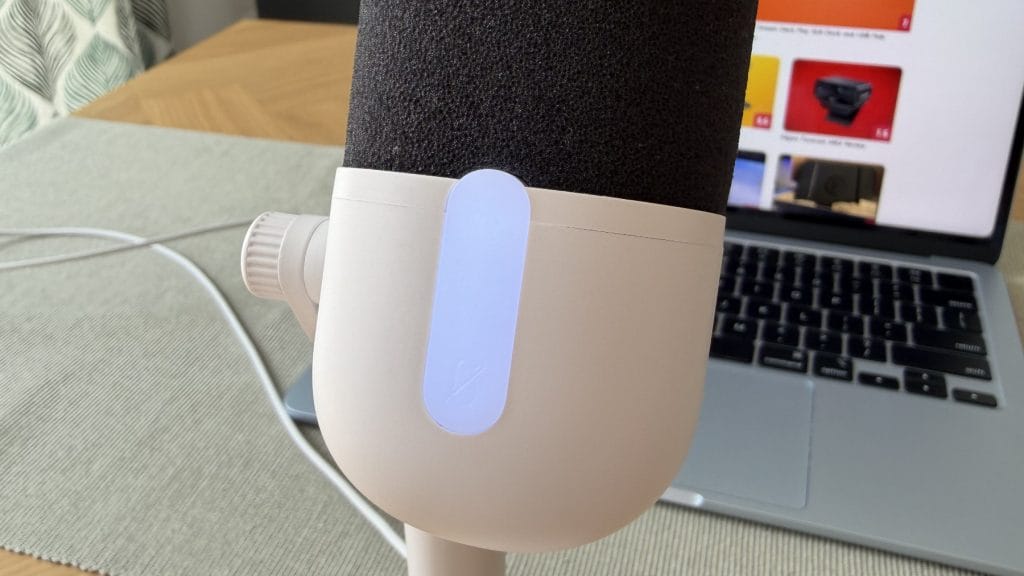
The front of the mic is dominated by a large capacitive mute button backed by an LED that glows white when active and switches to red when muted. It’s bold and hard to miss, and you can adjust the brightness through Wave Link if you’d rather tone it down. I did the opposite, personally, and ramped brightness up to the max as a clear visual reminder of whether I was or wasn’t muted on work calls. Around the back sits a 3.5mm headphone jack for system audio playback, though it’s worth knowing this isn’t direct mic monitoring like you’ll find on the Wave:3 MK.2.
performance
The Elgato Wave Neo houses a condenser capsule with a cardioid polar pattern behind that foam cover and metal grille, recording at up to 24-bit/96kHz with a 20Hz to 20kHz frequency response. That’s a respectable spec sheet for a mic at this price point, in fact, it’s arguably overkill given where the Wave Neo is most likely to end up. Nobody is dialling in 96kHz for a Monday morning standup on Teams and Elgato even did away with the option on its more premium Wave:3 MK.2.
There are no physical controls beyond the mute button on the Wave Neo which means any adjustments need to happen through your operating system’s audio settings or Elgato’s Wave Link software. The mute sensor itself is super responsive, I was able to trigger it by catching it with the top of my MacBook Air’s screen while adjusting positioning, but because it sits on the front face rather than the top like on the Wave:3, accidental muting wasn’t an issue in day-to-day use.
A look at Elgato’s own product page for the Wave Neo says everything about who the company thinks is buying this mic. There are no moody, RGB-lit streaming setups on show. Instead, it’s bright workspaces, laptop desks, and clean home offices. So that’s how I tested it. I took the Elgato Wave Neo away from my usual streaming rig and spent my time with it on Teams calls, Discord, and general productivity from my kitchen diner and work office.
Positioned properly, around 20cm away with a bit of care and attention, the Wave Neo sounds impressively clean. There’s a warmth to the vocal tone that’s pleasant and easy to listen to, and it represented a significant step up from my MacBook’s built-in microphone. The echoey, roomy quality of a hard-floored dining room was all but eliminated, replaced by a focused, clear voice. It’s not going to trouble the Wave:3 MK.2 for overall richness and detail, which at nearly double the price would be a surprise if it did, but for chatting on calls, the Elgato Wave Neo does a perfectly respectable job.
The catch is proximity and etiquette. Move the Wave Neo beyond 30cm or so away and the audio quality falls off noticeably. The Wave Neo still outperformed my MacBook’s mic at these distances in terms of filtering room echo, but I wouldn’t say I sounded meaningfully better anymore, just less echoey and more focused. This is a mic that rewards good habits.
Wave Link is where the Elgato Wave Neo picks up a couple of worthwhile extras. The standout is Voice Focus, Elgato’s AI-driven noise cancellation, which runs as a device-powered feature through the app rather than onboard the mic. In testing it did a decent job of rounding off the sound and filtering out ambient distractions, particularly helpful for the home workers I think this mic is targeting.
Beyond Voice Focus, Wave Link offers a low-cut filter and the ability to tweak gain and LED brightness. The Elgato Marketplace has additional filters and effects available to browse, but none of them are native to the Wave Neo or happen onboard. If you’re planning to run the mic without installing any software at all, it works perfectly well out of the box, but you’ll miss out on Voice Focus, which is arguably the most compelling reason to pair it with Wave Link in the first place.
Elgato doesn’t directly position the Wave Neo as a budget streaming option, but I could see it doing a passable job for a new creator willing to put the work in. The kind of EQ and DSP processing that higher-end mics handle natively will need to be done manually here, but the raw input is clean enough that there’s a workable foundation to build on. It’s not going to be anyone’s endgame mic, but as a starting point before upgrading down the line, it could serve well enough.
summed up
The Elgato Wave Neo does what it sets out to do. It’s a straightforward, clean-looking USB mic that will comfortably outperform whatever is built into your laptop on calls, and pairing it with Wave Link and Voice Focus makes it a practical choice for anyone working in acoustically imperfect spaces. Setup is as simple as it gets, it barely takes up any room on a desk, and the sustainability credentials are a nice touch.
The harder sell is actual value. At £89.99, this isn’t an expensive microphone, there’s no debate about that. However it does mean the Wave Neo sits in a slightly awkward spot where it’s not expensive enough to feel like a premium purchase but not cheap enough to be an impulse buy either. You’ll need to develop proper mic habits and keep it close to get the best out of it, and the occasional rough edges in construction, the wobbly riser and the pop filter seam, take a little of the shine off a product from a brand that usually sweats those details. As a microphone for streaming the Elgato Wave Neo isn’t really in the conversation, but as a work-from-home mic that’ll have you sounding sharper than most of your colleagues on the next call, it does the job without setting the world alight.